Laundry Room Ideas for Malaysian Homes
Practical laundry room ideas for Malaysian homes, from condo service balconies to terrace yards. Dry clothes in humid weather and save space.
It is 7pm, the sky has just opened up, and half the family’s school uniforms are still hanging outside. You run to the yard, pull everything in, and now wet shirts are draped over every chair in the house. Sound familiar?
In Malaysia, laundry is less about a pretty room and more about fighting rain, humidity and limited space. Most of us do not have a proper laundry room at all. We have a yard behind the kitchen, a small utility corner, or a narrow service balcony in a condo.
The good news is that even a tiny laundry area can work very well with some planning. Below are laundry room ideas that suit how Malaysians really live, from terrace houses in Klang Valley to high floor condos in KL.
Start With Where You Actually Do Laundry
Before buying racks or cabinets, look at the space you have and how you use it. Each type of home comes with its own problems.
The Yard in a Terrace or Semi-D
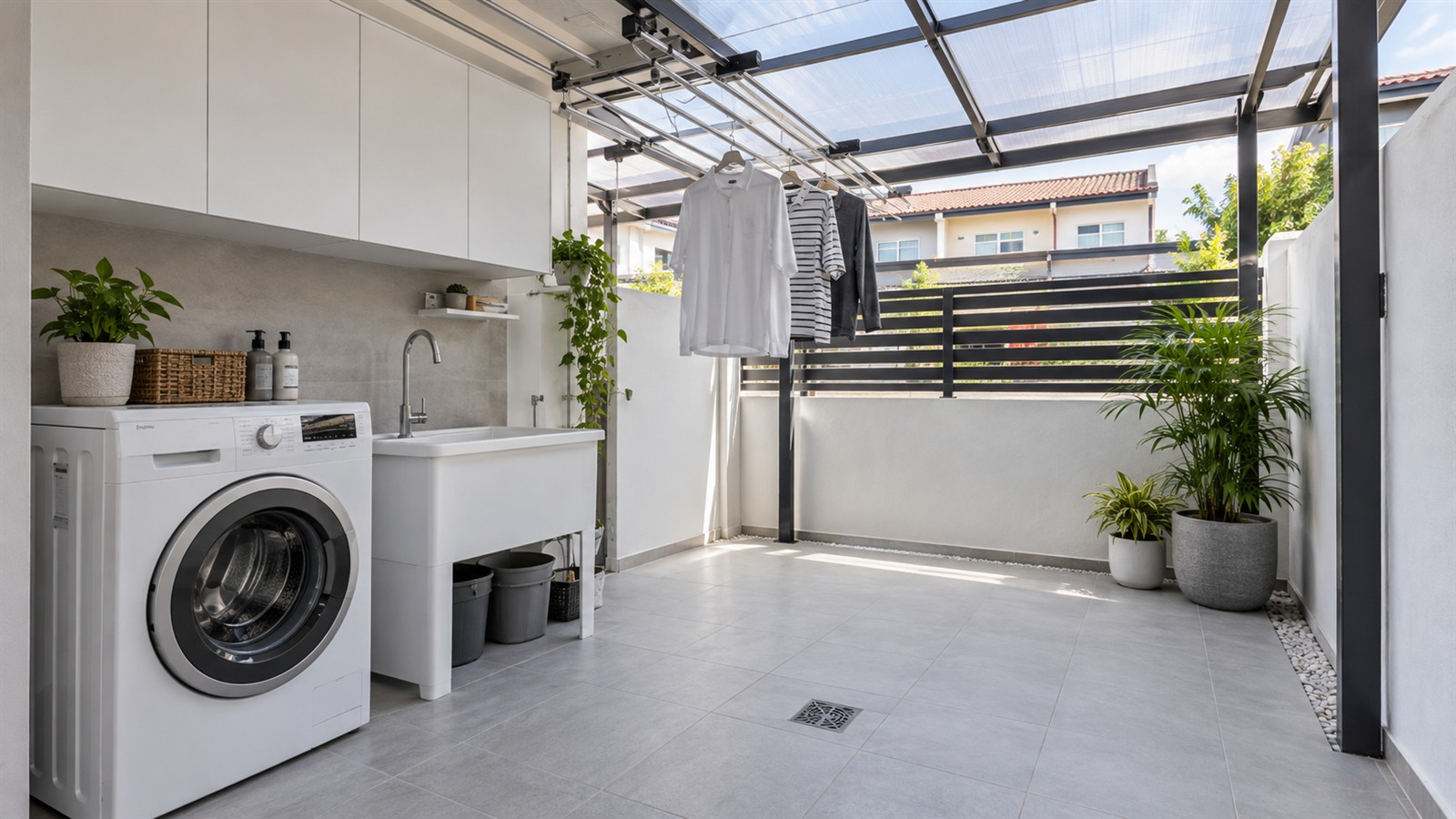
Landed homes usually have a yard at the back, next to the wet kitchen. It is open to the sky or covered by a roof, with a floor trap and a tap. This is a great spot for washing, but open yards get rain, dust and leaves. Many owners add a roof with clear panels so light still comes in while clothes stay dry.
The Condo Service Balcony
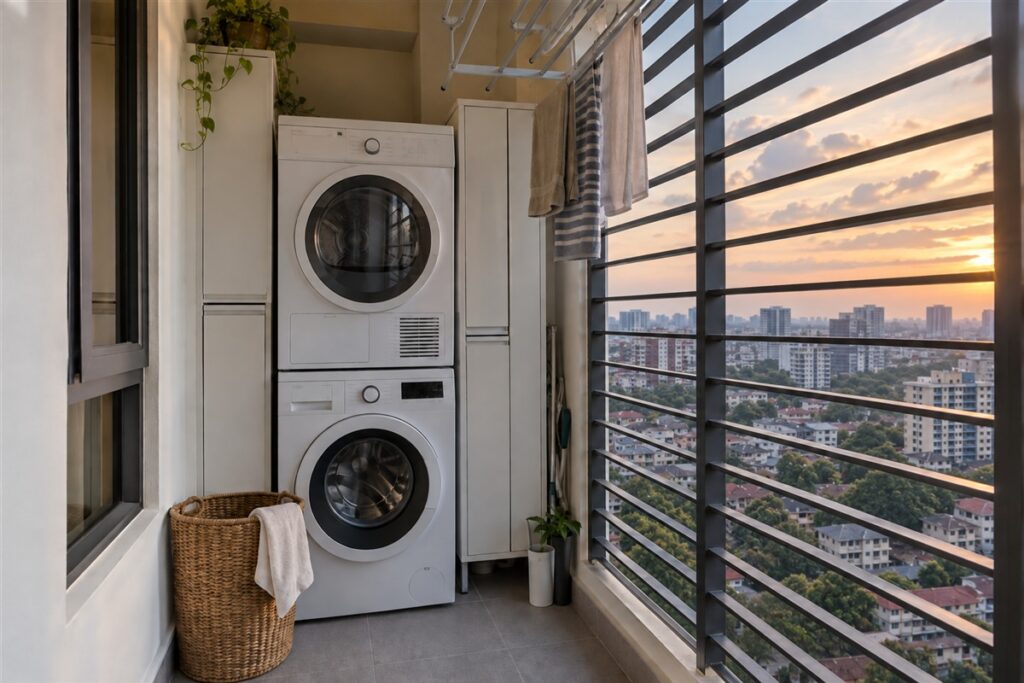
Most condos give you a small balcony or service area next to the kitchen. It is often narrow, with the washer in one corner and the aircond compressor in another. Space is tight, and your condo management may have rules about what you can hang or install there.
The Utility Corner Inside
Some smaller units and older apartments have no outdoor space at all. The washer sits inside the kitchen or even in a bathroom. Here, airflow and moisture control matter more than anything.
Solving the Drying Problem
Drying clothes is the biggest laundry headache in a humid, rainy country. Sun is free and works well, but you cannot count on it during the monsoon or on busy workdays.
A few ways to make drying easier:
- Ceiling drying racks. A rack you lower with a pulley or crank keeps wet clothes up and out of the way. It works well in covered yards and service balconies.
- Fold down wall racks. These fold flat when empty, which is useful in narrow spaces.
- A tumble dryer or washer dryer. If you often dry indoors, a dryer can save you a lot of stress. Heat pump and condenser types do not need a vent to the outside, which helps in condos.
- Good airflow. A ceiling fan or wall fan near the drying area cuts drying time and stops that musty smell.
- A dehumidifier. In a closed room, a dehumidifier pulls water out of the air so clothes dry faster.
Try not to hang wet clothes in bedrooms or the living room for long. The extra moisture can lead to mould on walls, curtains and furniture over time.
Washer and Dryer Stacking
When floor space is short, go up. Stacking a dryer on top of a front loading washer frees up a whole section of floor.
Here is what to check before you stack:
- Only front loading machines can be stacked. Top loaders open from above, so nothing can sit on them.
- Use a proper stacking kit made for your machines. It holds the dryer firmly so it does not shake off during a spin.
- Measure the height. The dryer controls should still be easy to reach, especially for shorter family members.
- Leave space around the machines for air to move and for pipes and plugs at the back.
- Make sure the floor is level and strong. A heavy machine on uneven tiles will shake and make noise.
If you do not need a separate dryer, a single washer dryer combo is another space saving choice. It washes and dries in one machine, though a full load usually takes longer.
Storage That Fits Small Laundry Spaces
Laundry areas collect clutter fast. Detergent, softener, pegs, hangers, baskets, mops and pails all need a home. Use the walls, because floor space is usually the thing you have least of.
Wall Cabinets and Open Shelves
Mount cabinets above the washer to hold detergent and cleaning supplies. Choose water resistant materials such as aluminium, PVC board or compact laminate, because normal particle board can swell in damp areas. Open shelves are cheaper and let things breathe, but they can look messy if you do not keep them tidy.
Hooks, Rails and Slim Racks
A rail with hooks works well for hangers, brooms and the mop. A slim rolling rack can slide into the gap beside the washer to hold bottles. Every small gap counts in a narrow balcony.
Baskets With a Purpose
Give each basket one job. One for dirty clothes, one for clean clothes waiting to be folded, one for items that need ironing. Plastic or rattan look baskets with holes let air in and stop smells building up.
Plan the Plumbing and Power Early
Many laundry problems start with poor planning during renovation. If you are hacking walls or redoing the yard, sort these out first.
Water points. Place the tap at a height that suits your machine. Consider a separate tap for a utility sink.
Drainage. The washer drain pipe should run into a floor trap or proper outlet, not just out through a gap in the grille. Slope the floor gently towards the drain so water does not pool.
Power points. A washer and a dryer each need their own socket. Keep sockets high enough to stay away from water and ask your electrician about the right safety protection for wet areas.
A utility sink. A small, deep sink is very handy for soaking stains, washing shoes and rinsing mops. If you have room, it is worth adding.
For condos, check with your condo management before moving pipes or adding a roof or grille. Many buildings have rules about the look of the outside facade.
Keeping Mould and Smells Away
Humidity is the silent enemy of every Malaysian laundry area. A few habits help a lot:
- Leave the washer door open after each load so the drum can dry.
- Clean the rubber seal and detergent drawer every few weeks.
- Wipe down cabinets and shelves if you notice black spots.
- Choose tiles and grout that are easy to clean.
- Keep at least one window or vent open whenever possible.
Light colours also help. They make a small space feel bigger and show dirt early, so you can clean before mould sets in.
What Affects the Cost of a Laundry Area Makeover
There is no single price for a laundry area. The final cost depends on how much you change. Things that make a difference:
- If you need new plumbing, drainage or electrical points
- Adding a roof, grille or glass panels over a yard
- The type and length of cabinets you install
- Materials that handle water, which may cost more but last longer
- Machines such as a dryer or washer dryer combo
Get at least three written quotes, and ask each contractor to list the same items so you can compare fairly. If you are not sure who to call, a directory like Renovation Pages can help you find contractors near you.
Laundry Questions We Get Asked
Can I put a dryer in a condo without an outside vent?
Yes. Condenser and heat pump dryers collect the water inside the machine or send it down a drain, so they do not need a vent through the wall. This makes them a common choice for condo units.
How do I dry clothes during the rainy season?
Use a covered drying rack with a fan blowing across it, or a dryer if you have one. A dehumidifier in a small closed room also helps. Avoid overloading the rack so air can move between clothes.
Is it safe to stack a washer and dryer?
Yes, as long as both are front loaders and you use a stacking kit made for them. Make sure the floor is level so the machines do not shake too much.
What materials work best for laundry cabinets?
Choose materials that do not mind water, such as aluminium, PVC board or compact laminate. Regular particle board can swell and fall apart in damp spaces.
A Laundry Area That Works for You
A good laundry space does not need to be big. It needs to keep clothes dry when the rain comes, give every item a place, and stay fresh in our humid air. Start with the space you have, plan the pipes and power early, and use your walls well. Small changes can make laundry day much easier.