Shoe Cabinet Design Ideas for Small Entrances
Smart shoe cabinet design ideas for Malaysian homes. Compare built-in and freestanding units, stop shoe smell in humid weather and fit a slim cabinet in a condo.
Count the shoes at your front door right now. Work shoes, school shoes, slippers, sports shoes, the pair your guest left last week. In most Malaysian homes we take our shoes off before we step inside, so the entrance quickly turns into a small mountain of footwear.
A good shoe cabinet fixes this. It hides the mess, keeps the floor clear for opening the door, and gives you a spot to sit and put on your shoes. The tricky part is that entrances are usually small, and our weather is hot and damp. Shoes kept in a closed box in humid air can start to smell or even grow mould.
This guide looks at shoe cabinet design from a practical angle: size, airflow, seating, slim options and placement.
Start With a Shoe Count
Before you look at any design, count what you own. Then count what you actually wear each week. These are two very different numbers.
The shoes you wear every day need to sit near the door, easy to grab. Formal shoes, hiking boots and wedding heels can live in a bedroom wardrobe or a storeroom.
A simple way to plan:
- Daily shoes for each person: two or three pairs
- Slippers for the house and for going downstairs
- Umbrellas, a shoe horn and a small brush
- A few spare spots for guests or new purchases
Once you know the real number, you can pick a size that fits the space instead of filling it.
Built-in or Freestanding?
This is the first big choice. Both work, but they suit different homes and budgets.
Built-in Shoe Cabinets
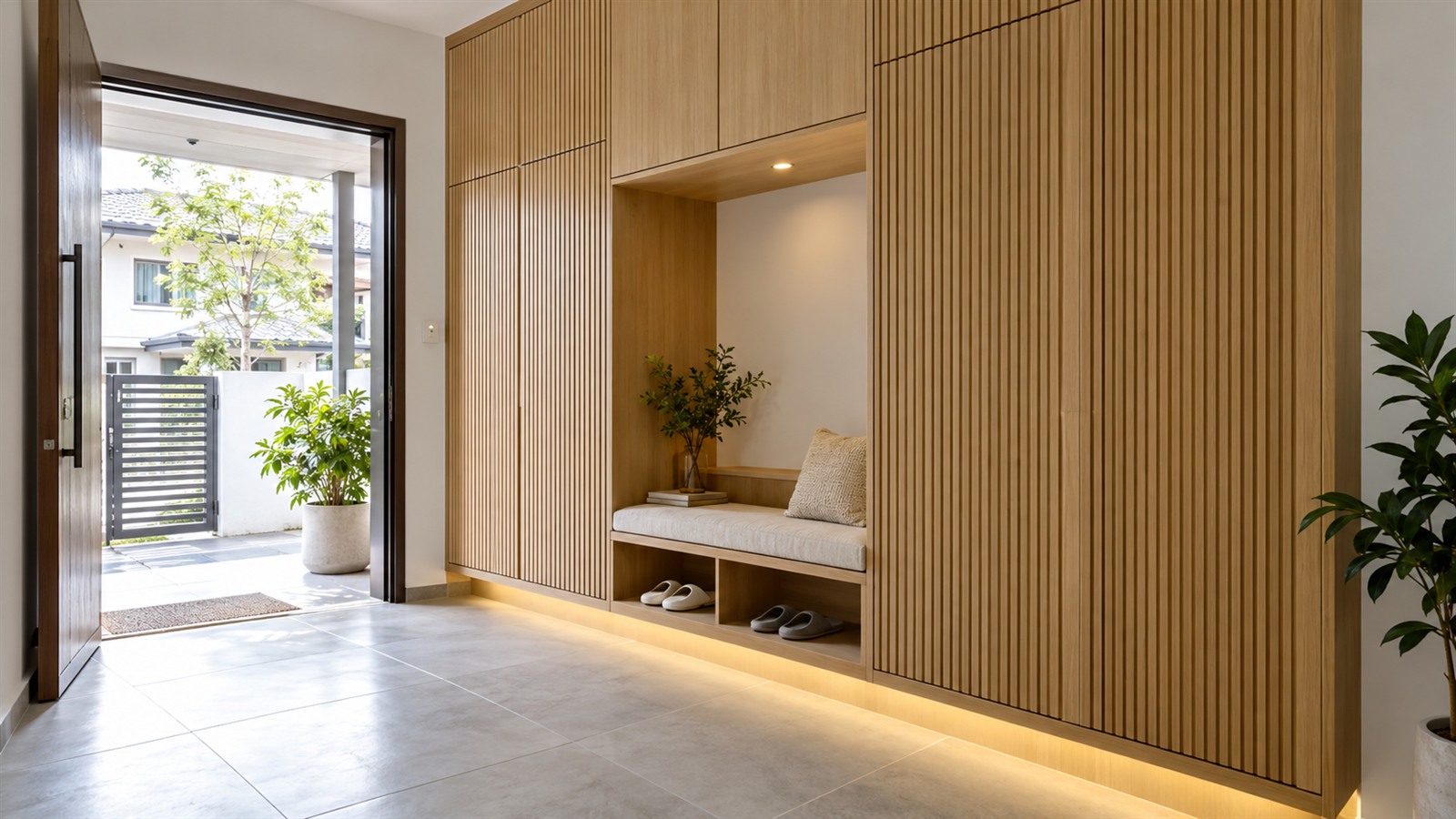
A built-in cabinet is made to fit your wall exactly. It can run from floor to ceiling, wrap around a corner, or hide a DB box or meter panel. Because it fills the full space, it looks neat and uses every bit of height.
Built-in units work best when you own the home and plan to stay. They are usually part of a bigger carpentry package, so your designer can match the doors to the kitchen or the living room cabinets.
The downside is that you cannot take it with you when you move.
Freestanding Shoe Cabinets
A freestanding cabinet is a piece of furniture you can buy, move and replace. It suits renters, first homes and families who like to change things around.
The trade off is fit. A ready made unit rarely matches your wall to the centimetre, so you may end up with a gap at the side or wasted space above. Choose one with adjustable feet so it sits level on tiled floors, which are often slightly uneven near the door.
| Point to compare | Built-in | Freestanding |
|---|---|---|
| Fit to the space | Exact | Close, with gaps |
| Use of height | Floor to ceiling | Usually waist or chest height |
| Moving house | Stays behind | Comes with you |
| Changes later | Harder | Easy |
| Best for | Owners, long stays | Renters, first homes |
Air, Smell and Our Humid Weather
This section matters more in Malaysia than in most places. Shoes come home damp from rain, sweat or a wet car park floor. Shut them inside a sealed cabinet and the moisture has nowhere to go.
Here are the details that help most:
Ventilated doors. Choose doors with slats, small holes, rattan panels or a gap at the top and bottom. Air should be able to move through the cabinet even when it is closed.
Open or wire shelves. Slatted shelves let air rise from the lower shelves to the upper ones. Solid shelves trap moisture under each pair.
A small gap at the back. Ask your carpenter to leave a little space between the cabinet back and the wall. Walls near the door can get damp, and this stops that dampness from passing into the wood.
Moisture resistant boards. For built-in units, ask about boards rated for damp areas and good edge sealing. Cheap board edges can swell when they soak up moisture.
Let shoes dry first. Keep a small open rack or mat near the door for wet shoes. Move them into the cabinet only once they are dry.
Simple odour control. A sachet of charcoal or a moisture absorber box on each shelf helps a lot. Some homeowners also add a small fan or a low heat dryer inside the cabinet, but check with your electrician before adding any power point inside wooden carpentry.
Add a Bench Seat
Putting on shoes while standing on one leg is not fun, especially for children, older parents and anyone carrying a bag. A bench seat turns your shoe cabinet into a proper entrance.
There are two common ways to do this. The first is a low cabinet at sitting height with a cushion on top. The second is a tall cabinet with an open gap in the middle, where a seat ledge is built in.
A few tips:
- Keep the seat height close to a normal chair so it is easy to sit and stand
- Leave space under the seat for daily slippers, so you can slide them out with your foot
- Use a wipeable cushion cover, because it will get dusty
- Add a hook or two above the seat for bags, keys and helmets
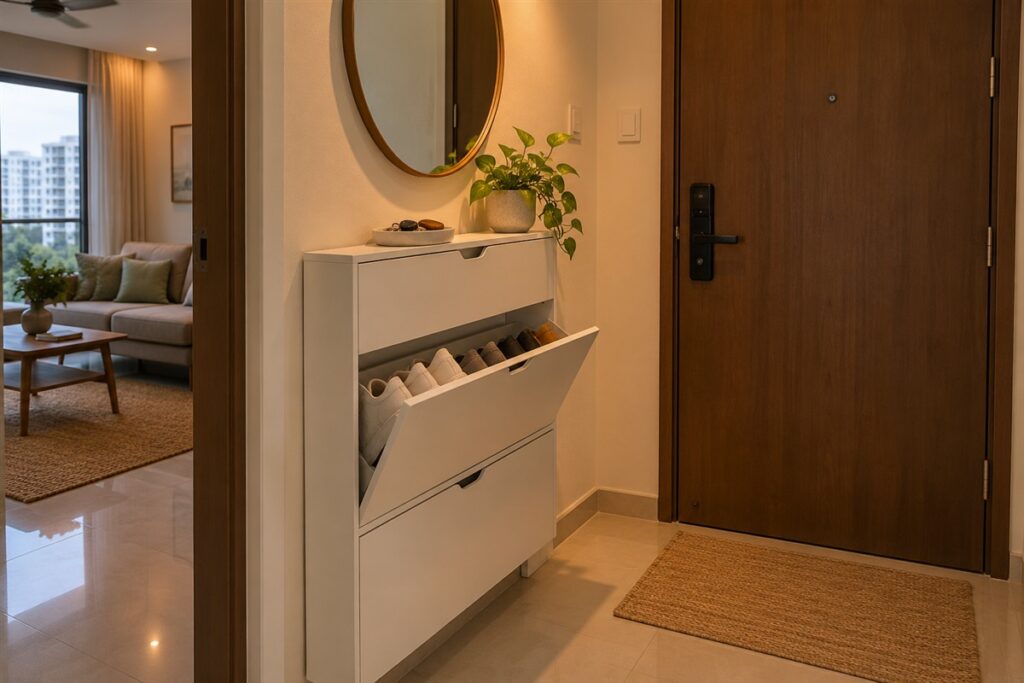
Slim Tilt Cabinets for Condos
In many condos, the space between the front door and the next wall is very tight. A normal cabinet with deep shelves would block the door or the walkway.
This is where a slim shoe cabinet with tilt out drawers comes in. Instead of laying shoes flat, each drawer flips forward and holds shoes standing at an angle. This lets the cabinet be much shallower than a normal one, often thin enough to sit behind the door swing or along a narrow passage.
Good things about tilt cabinets:
- They fit narrow walls that nothing else can use
- The top surface works as a shelf for keys, mail and a small plant
- They look clean because every pair is hidden
Things to watch:
- Very large shoes and boots may not fit, so test with your biggest pair
- Airflow is limited, so add a moisture absorber in each drawer
- Fix the cabinet to the wall so it does not tip forward when a child pulls the drawers
Pair a slim cabinet with a mirror above it. It makes a small entrance feel wider.
Inside the Door or Outside It?
Many condo owners like to keep shoes in the corridor, right outside the front door. It keeps dust and dirt out of the home. But this is not always allowed.
Corridors are shared space, and they are also part of the fire escape route. Some buildings ban shoe racks outside units completely. Others allow a small rack if it does not block the walkway. Always check with your condo management before placing anything outside.
If you live in a terrace house or semi-D, you have more freedom. A cabinet in the porch or under a covered car porch area works well, as long as it is protected from direct rain. Choose materials that can handle heat and humidity, such as powder coated metal or treated wood, and keep the cabinet raised off the floor so water can flow under it.
For most condos, the inside option is safer. A slim cabinet and a mat inside the door keeps your neighbours happy and avoids letters from management.
Style Ideas That Still Work Hard
A shoe cabinet is often the first thing guests see, so it is worth making it look good.
- Handleless doors with push to open fittings give a clean, modern look
- Floating cabinets raised off the floor make the entrance feel bigger and let you tuck slippers underneath
- Rattan or cane panels on the doors add warmth and help airflow
- A strip light under a floating cabinet works as a soft night light when you come home late
Questions About Shoe Cabinets
How deep should a shoe cabinet be?
It depends on how you store shoes. Shoes laid flat need a deeper shelf. A slim tilt cabinet can be much shallower. Measure your largest daily pair and use that as your guide.
How do I stop my shoe cabinet from smelling?
Let shoes dry before storing them, choose ventilated doors, and use charcoal or moisture absorbers on each shelf. Wipe the shelves every few weeks.
Can I put a shoe rack outside my condo unit?
Only if your building allows it. Check with your condo management first, as corridors are shared areas and must stay clear.
Is a built-in shoe cabinet worth the cost?
If you own the home and plan to stay, it is often worth it for the fit and storage. The cost depends on the size, board type, door finish and fittings. Get at least three written quotes that list the same items so you can compare fairly.
A Clear Floor at the Door
The best shoe cabinet design is the one that matches how your family actually lives. Count your daily shoes, give them air, add a seat if you can, and check the rules before using the corridor. A clear, tidy entrance makes coming home feel calmer every single day.