Modern Contemporary Interior Design: A Simple Guide
Modern or contemporary? A plain English guide to modern contemporary interior design, with colours, materials, furniture and examples for condos and landed homes.
Picture a young couple sitting with their interior designer for the first time. The designer asks what style they like. One of them says “modern”. The other says “contemporary”. They look at each other, unsure if they just agreed or disagreed.
This happens all the time. The two words are used as if they mean the same thing, and in Malaysian homes they often end up mixed together. That mix even has a name in many design offices: modern contemporary interior design.
This guide explains the difference in plain language, then shows how to put the style together at home, from colours to furniture, with examples for both condos and landed houses.
Two Words, Two Ideas
Here is the simplest way to remember it.
Modern is a fixed style from the past. It grew out of design movements in the early and middle twentieth century. Think clean lines, simple shapes, natural wood, and furniture with slim legs. It does not change, because it belongs to a certain period.
Contemporary means “of the present moment”. It is whatever feels fresh right now. Ten years ago, contemporary meant glossy white and lots of grey. Today it leans towards warm neutrals, curves and texture. In ten more years, it will look different again.
So modern is a fixed point, while contemporary keeps moving.
| Modern | Contemporary | |
|---|---|---|
| Time | A set period in design history | Today, always changing |
| Lines | Straight, clean, simple | Straight and curved |
| Colours | Earthy, warm neutrals, some bold accents | Neutrals with today’s popular tones |
| Materials | Wood, leather, natural fibres | Wider mix, including metal, glass, stone |
| Mood | Warm and simple | Fresh, sometimes bolder |
Why the Mix Works So Well in Malaysia
Modern contemporary interior design takes the calm order of modern style and adds the fresh finishes of today. The result is clean but not cold, simple but not boring.
It also suits how we live. Our homes need to handle heat, humidity, dust and busy family life. A clutter free layout with easy to clean surfaces makes daily housework simpler. Neutral colours keep rooms feeling cool on hot afternoons. And because the style is not tied to one culture, it sits comfortably with family heirlooms, festive decorations and personal touches.
Building the Look, Layer by Layer
Colours
Start with a calm base. Warm white, soft beige, light greige and pale taupe are safe choices for walls and large surfaces. Then add depth with one or two darker tones, like charcoal, olive or deep brown.
Keep strong colours small. A rust cushion, a blue painting or a green armchair gives life to a room without taking over.
Materials
Mix smooth and textured surfaces. A simple combination might be:
- Light timber or timber look flooring
- Matt cabinet doors in a soft neutral
- A stone or sintered stone countertop
- Black or brushed metal details on lights and handles
- Linen, boucle or cotton fabrics for softness
Avoid too much high gloss. It shows fingerprints and can feel dated quickly.
Furniture
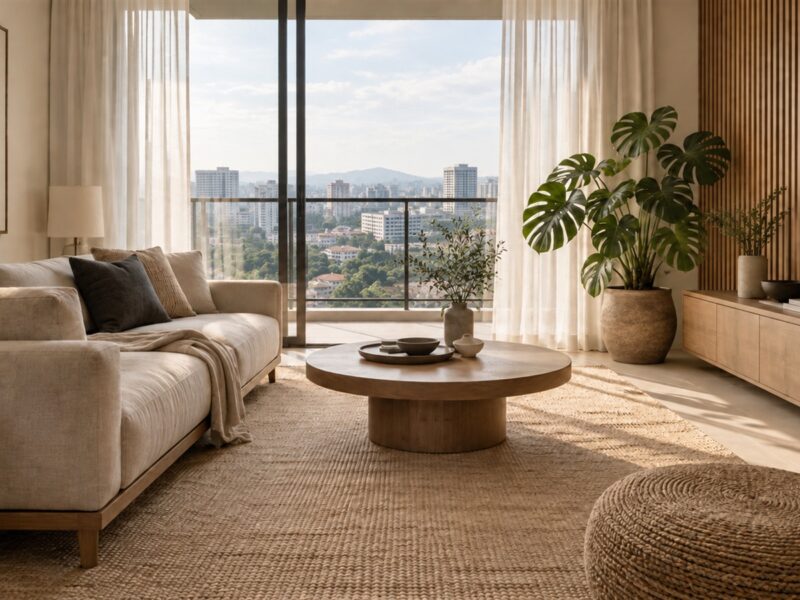
Furniture should look simple but comfortable. Low sofas with clean arms, round or oval coffee tables, and chairs with slim frames all fit the style. A few curved pieces stop a room from feeling too boxy.
Choose fewer, better pieces instead of filling every corner. Leave some breathing space around furniture so the room feels open.
Lighting
Lighting is where this style really shines. Use a plaster ceiling with hidden cove lights for a soft glow, then add a statement pendant over the dining table. Wall lights and floor lamps help create layers, so the room feels warm at night.
Storage
Clean lines only work if clutter is hidden. Built-in cabinets with flat doors, a TV console with closed storage, and a tall shoe cabinet near the door all help keep surfaces clear.
What It Looks Like in a Condo
Imagine a three bedroom condo in the Klang Valley with an open plan living and dining area.
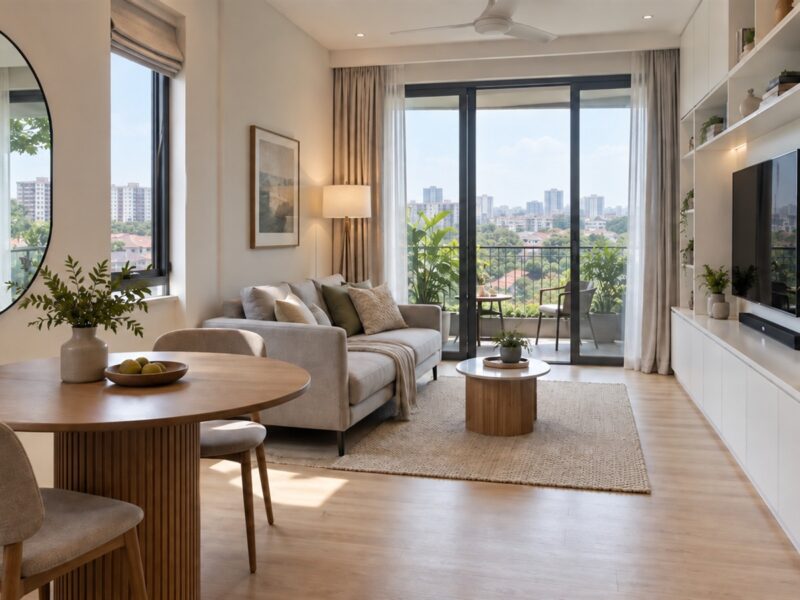
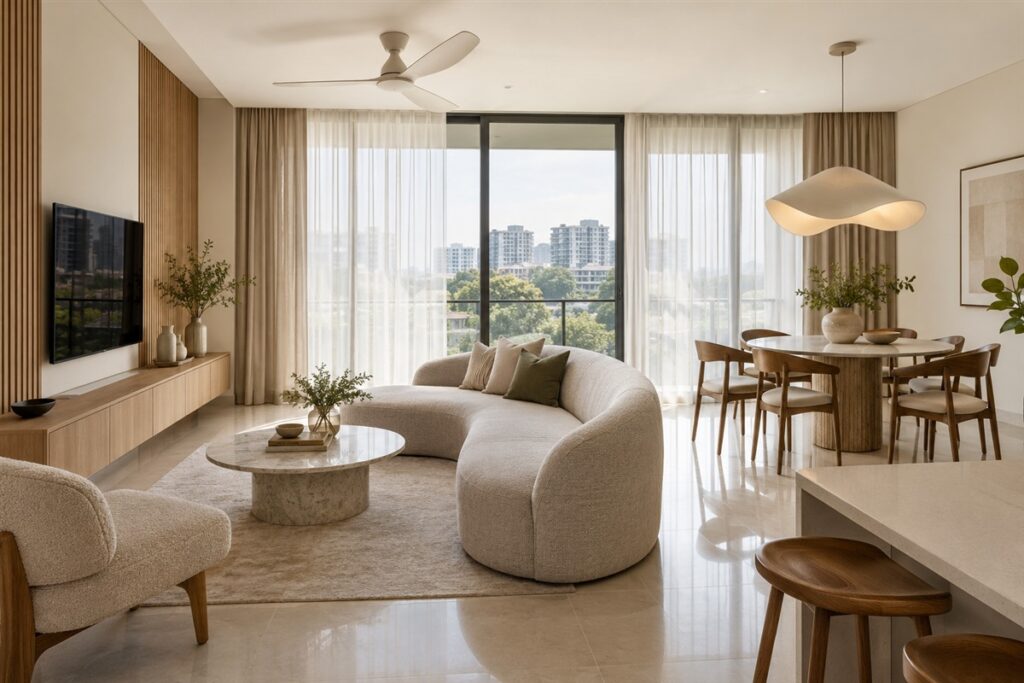
The walls are warm white. A long, low TV console in light oak runs along one wall, with fluted panels behind it. A curved sofa in oatmeal fabric faces the TV, with a round marble look coffee table in front.
Over the dining table, a single sculptural pendant draws the eye. The kitchen cabinets are matt greige with slim black handles. Sheer curtains soften the large windows and let the daylight in while cutting glare.
Nothing here is loud. Yet the space feels finished, because each piece follows the same simple rules.
What It Looks Like in a Landed Home
Now picture a double storey semi-D. There is more room to play.
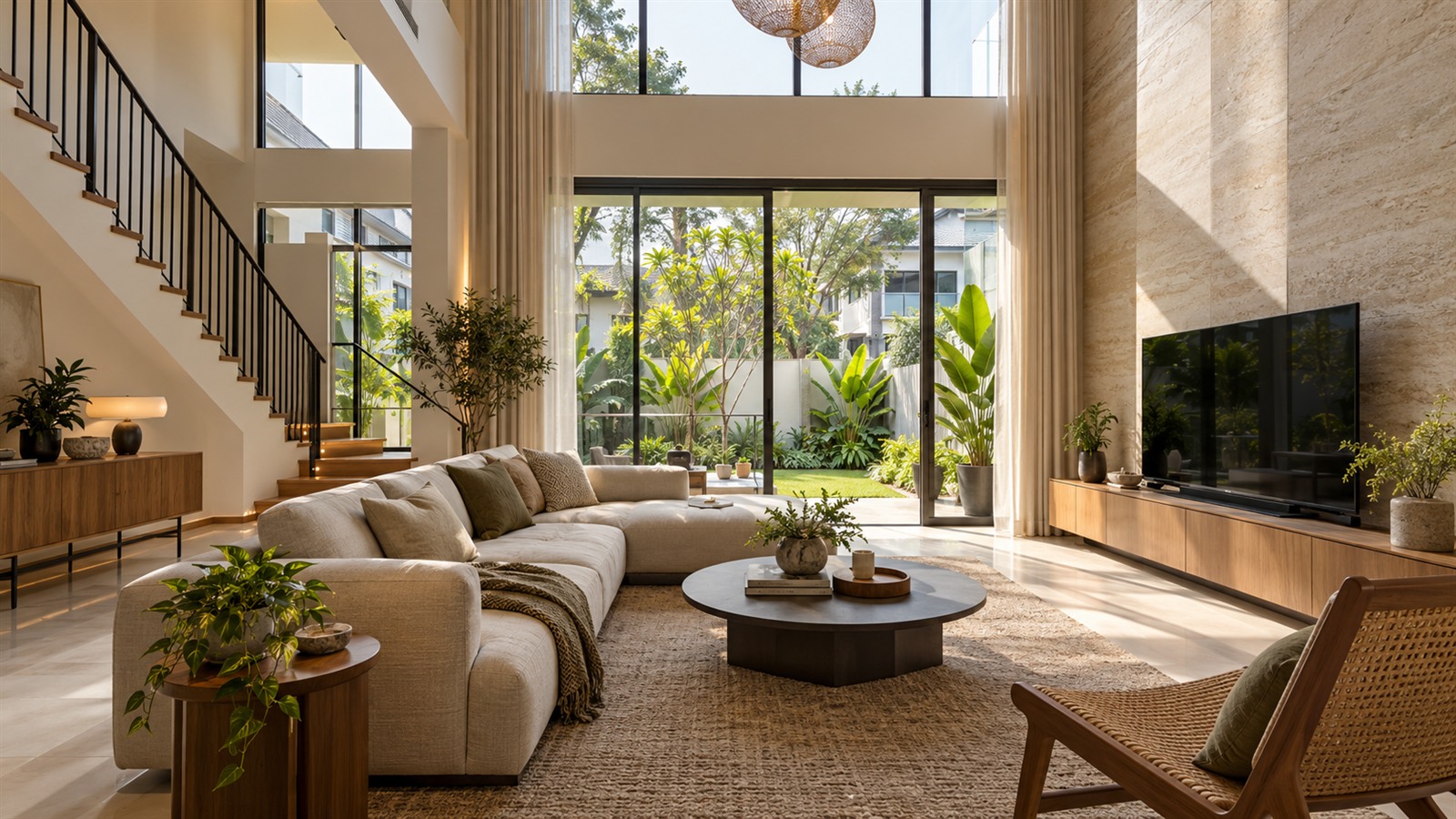
The double volume living area might feature a tall stone look feature wall. A staircase with a slim metal railing and timber steps becomes a design piece in itself. Large sliding doors open onto a small garden, blurring indoor and outdoor space.
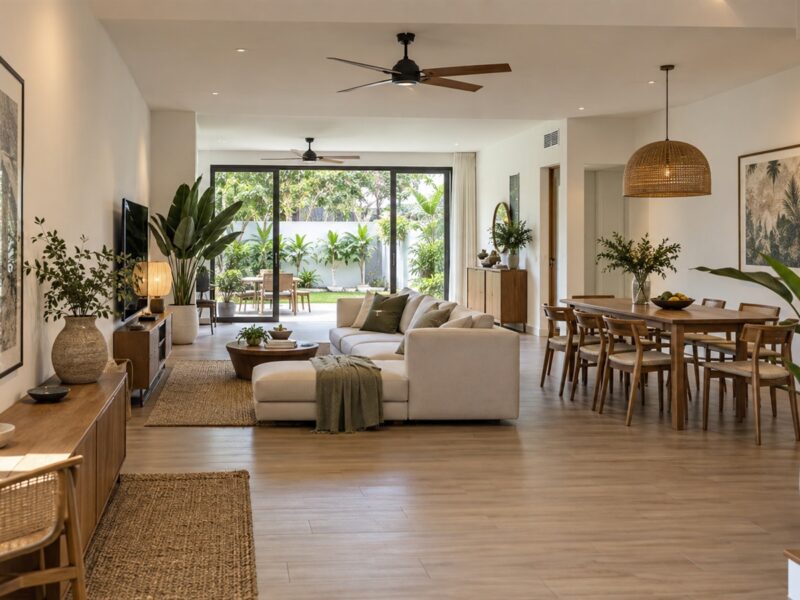
In landed homes, you can use larger furniture and bolder lighting. A long dining table for family gatherings, a big area rug and an oversized pendant all suit the higher ceilings. Just keep the same calm colour base so the whole house feels connected.
If you are still searching for your next home and want a layout that suits this style, you can browse new property launches in Malaysia and look for open floor plans, big windows and good ceiling heights. These make modern contemporary design much easier to pull off.
Carrying the Style Into Bedrooms, Kitchens and Bathrooms
The living room usually gets the most attention, but the style works best when the whole home follows it.
In the bedroom, keep the bed frame low and simple, with a padded or timber headboard. Use soft, warm lighting from bedside lamps or wall lights rather than one strong ceiling light. A wardrobe with flat, handleless doors keeps the wall clean and quiet.
In the kitchen, flat cabinet doors, a slim countertop edge and a simple backsplash fit the look. Choose a hob, hood and oven in matching finishes so nothing stands out awkwardly. If you have a wet kitchen, it can stay practical, as long as the dry kitchen in view keeps to the same calm palette.
In the bathroom, large format tiles with fewer grout lines, a floating vanity and a frameless glass shower screen all feel clean and current. Pick matt black or brushed fittings to tie in with the rest of the home.
A Short Checklist Before You Start
- Agree on two or three main colours for the whole home
- Choose one wood tone and stick with it in most rooms
- Plan hidden storage first, then the decor
- Mark where every light will go before the ceiling is done
- Keep one or two curved pieces to soften straight lines
- Leave space for plants, art and personal items
Where People Go Wrong
- Too cold: Grey everywhere with no wood, fabric or plants makes a home feel like an office.
- Too empty: Simple does not mean bare. Add rugs, art and greenery.
- Too trendy: Following every new trend at once makes the home look dated sooner.
- Poor lighting: One bright ceiling light flattens everything. Use layers.
Thinking About Cost
Your budget will depend on how much built-in carpentry you need, the materials you pick, the size of the home and how much hacking or ceiling work is involved. There is no fixed price. Get at least three written quotes from designers or contractors, and make sure each one lists the same items.
Common Questions
Is modern contemporary design expensive?
It does not have to be. The look depends more on simple shapes, a calm colour plan and good lighting than on costly materials.
Can I mix modern contemporary with other styles?
Yes. It blends well with Japandi, a little rattan, or heritage pieces. Keep the colour base consistent so the mix feels planned.
Will it look dated soon?
The modern parts age slowly. The contemporary parts, like trendy colours, may change. Keep big items neutral and update small accessories over time.
Does it suit small condos?
Very well. Clean lines, hidden storage and light colours help small spaces feel bigger.
Simple Rules, Lasting Results
Modern contemporary interior design is really about two things: clear, simple lines from the past, and fresh, comfortable finishes from today. Build a calm base, add warmth with wood, fabric and light, and hide the clutter. Follow those simple rules and your home will feel current now and still look good for years.