Glass Partition Ideas for Offices
Planning a glass partition for your office? Compare full and half height, framed and frameless, frosted film, doors, acoustics and cleaning before you decide.
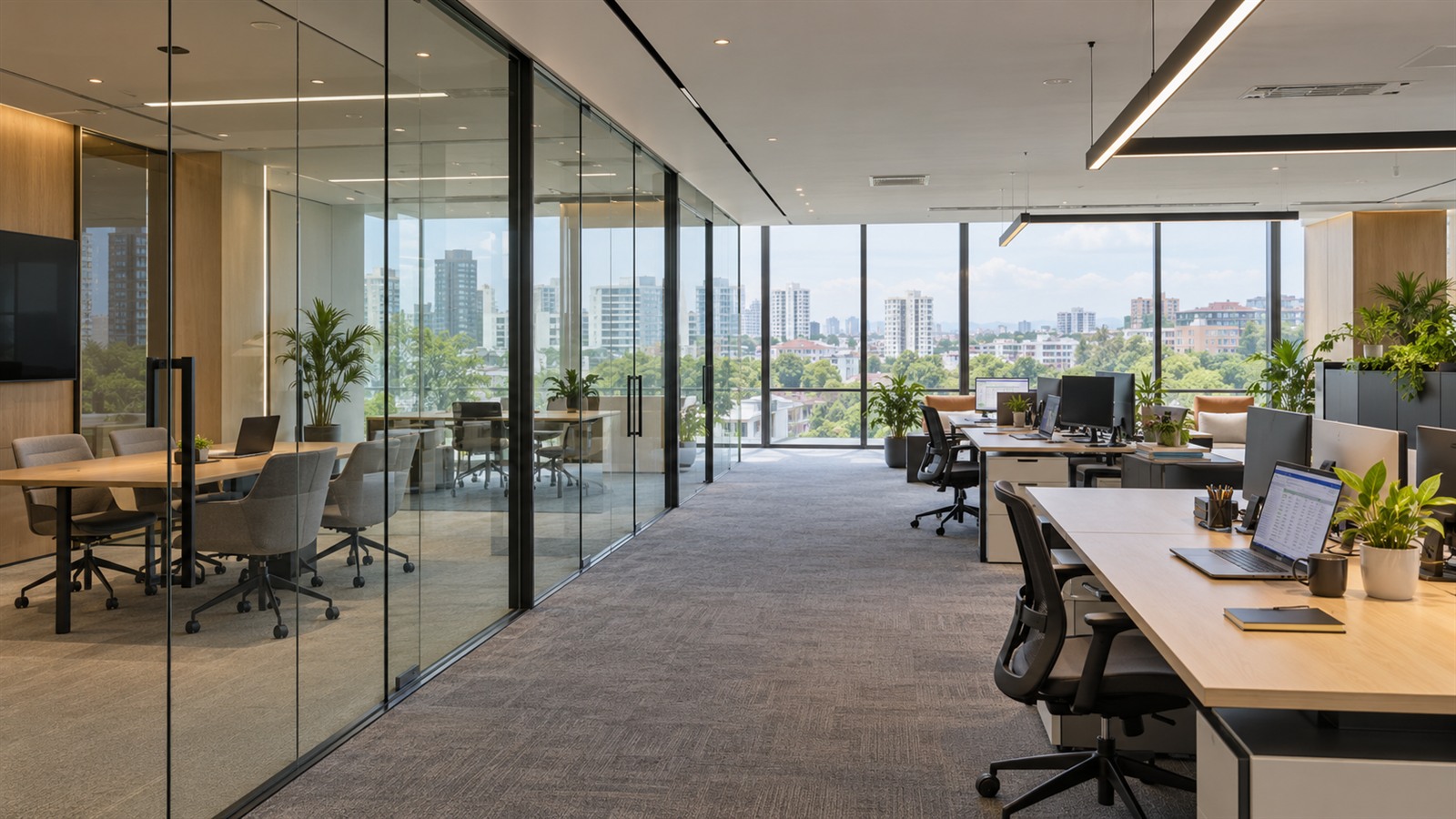
The manager’s room has a solid wall and a small door. Inside, it feels like a box. Outside, the team has no idea if the boss is free, so they knock, wait and knock again. Meanwhile the only window in the unit is inside that room, and the rest of the office sits under white ceiling lights all day.
This is one of the most common problems in Malaysian offices, and a glass partition is often the simplest fix. Glass lets daylight travel deeper into the space. It shows who is busy and who is free. It makes a small unit feel larger without taking away the rooms people need.
But glass is not one single product. There are many choices to make, and each one changes how the office looks, sounds and feels. This guide walks through those choices one pair at a time, so you can brief your designer or contractor with confidence.
Full Height or Half Height?
This is usually the first question, and it shapes everything else.
A full height glass partition runs from the floor to the ceiling. It creates a proper room. You can close the door and have a private conversation, and the aircond in that room can be zoned on its own if the system allows it. Full height is the right choice for meeting rooms, manager rooms and anything that needs to block sound.
A half height partition stops somewhere around desk level or a little above. Usually it sits on a low solid base or a cabinet. It marks out an area without closing it. You still hear the room, and you still share the same air. This works well for:
- Separating a reception counter from the open work area
- Framing a small pantry or a printer corner
- Giving a team cluster its own edge in a big open plan floor
- Adding a light screen behind a sofa in a waiting area
A simple rule: if people will talk about money, staff or clients behind it, go full height. If you only want to show where one zone ends and another begins, half height is often enough, and it costs less.
Framed or Frameless?
Once you know the height, look at how the glass is held in place.
Framed glass partition
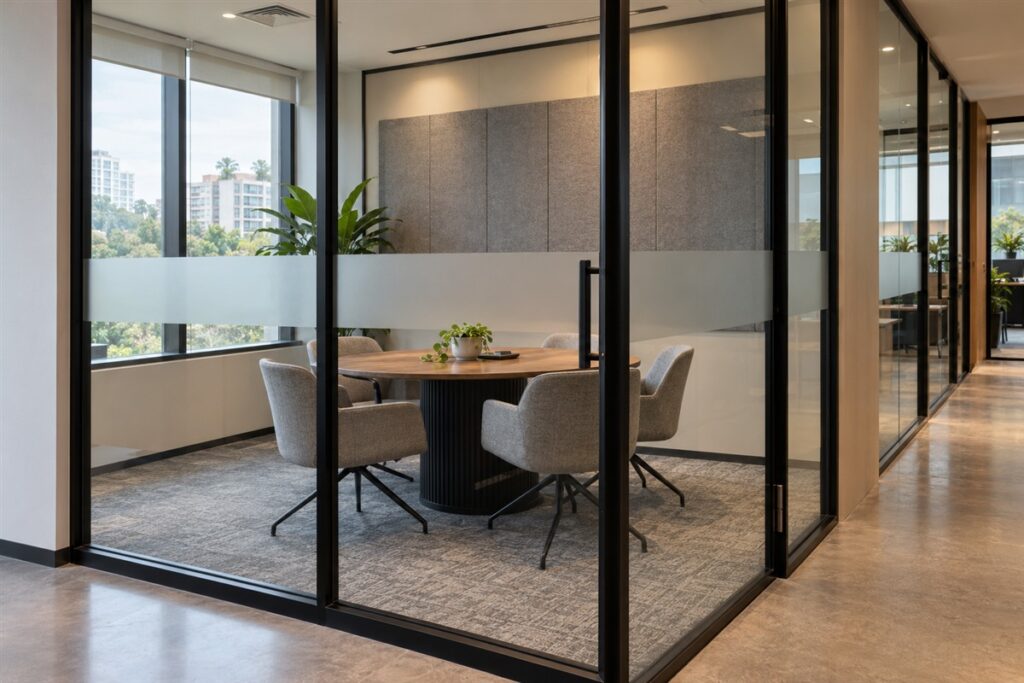
Framed systems hold each glass panel inside aluminium sections at the top, bottom and sometimes between panels. The frames can be thin or chunky, and they come in silver, black, white or wood tones. Black frames with clear glass give a popular, slightly industrial look.
Frames have practical benefits too. They make it easier to fit doors, blinds and door closers. They can also hold double glazing, which helps with sound.
Frameless glass partition
Frameless systems use thick glass panels joined edge to edge with clear joints or slim channels hidden in the floor and ceiling. The result is clean and open, with almost nothing to interrupt the view.
Frameless looks very polished, but it needs a level floor and ceiling and careful installation. Small gaps at the joints can let sound through. It also shows fingerprints and smudges more clearly, since there are no frames to break up the surface.
| Point | Framed | Frameless |
|---|---|---|
| Look | Defined lines, can add character | Clean, open, minimal |
| Sound | Easier to seal and double glaze | Joints can leak sound |
| Doors and blinds | Simple to add | Possible but needs more planning |
| Site conditions | More forgiving | Needs level floor and ceiling |
Privacy Without Losing the Light
Clear glass is lovely until someone has a difficult conversation in front of the whole office. That is where frosted glass and film come in.
A frosted glass partition blocks the view but still lets light through. You can buy glass that is already frosted, or you can apply frosted film to clear glass. Film is cheaper to change later, which matters if your layout or branding may change.
Some ideas that work well:
- A frosted band at eye level. Leave the top and bottom clear and frost a strip across the middle. People can see the room is in use, but faces and screens stay private.
- Gradient film. Frosted at the bottom, fading to clear at the top. This keeps the ceiling bright while hiding desks and laptops.
- Logo or pattern film. Your company logo, lines or a simple pattern cut into the film. This doubles as branding and as a safety marker.
- Blinds inside or outside. For rooms that need full privacy now and then, such as HR or interview rooms, add roller blinds or a frosted film on one side and blinds on the other.
Sound: The Honest Truth About Glass
Glass reflects sound. A room with three glass walls and a hard floor can echo badly, and a single layer of thin glass will not stop a loud voice from reaching the next desk.
If sound matters, talk to your contractor about these points early:
- Glass thickness. Thicker glass generally blocks more sound than thin glass.
- Double glazing. Two layers of glass with a gap between them perform much better than one.
- Seals and gaps. Sound escapes through the tiniest gap. Ask about seals at the ceiling, floor and around doors.
- The ceiling void. If the partition stops at a false ceiling but the space above is open, sound simply travels over the top. The gap above may need to be closed.
- Soft surfaces inside. A carpet, an acoustic panel on the solid wall and fabric chairs all help stop the echo.
A glass meeting room can be quiet enough for normal talk, but a fully soundproof room needs more planning and budget.
Choosing the Right Door
Doors get used hundreds of times a day, so they deserve attention.
Swing doors are simple and seal better, but they need space to open. In a narrow corridor, a swing door can block people walking past.
Sliding doors save floor space and suit small offices. They are a little harder to seal for sound, so they suit spaces where privacy is less critical.
Pivot doors turn on a point near one side. They look striking in a frameless setup but need a good installer.
Ask about door closers so doors do not slam, a lock if the room stores files, and a handle that feels solid in the hand. A cheap handle on a beautiful partition is the first thing people notice.
Safety Glass and Approvals
Office glass should be a type of safety glass, so that if it breaks, it does not fall into large sharp pieces. Your contractor will know which types are suitable for partitions and doors, and you should ask them to confirm this in writing.
Large clear panels also need markings at eye level so people do not walk into them. A strip of film or a logo band solves this nicely.
Before work starts, check with your building management. Many office towers have rules about partition types, working hours, fire safety and how the ceiling can be touched. Some changes may need approval from the building or the local authority, so let your designer or contractor handle the paperwork and keep copies.
For readers who want to learn more about building materials and suppliers, Industrial Malaysia has guides and industry news on construction and manufacturing that can help you understand the options before you speak to suppliers.
What Affects the Cost
There is no fixed price, because every office is different. The final cost depends on:
- The total length and height of the partition
- Framed or frameless, and the frame finish
- Glass thickness, and single or double glazing
- The number and type of doors
- Frosted film, logo film or blinds
- Work on the ceiling, floor or aircond to fit the new layout
Get at least three written quotes, and ask every contractor to list the same items so you can compare them fairly.
Keeping Glass Clean
Use a mild glass cleaner and a soft cloth, and avoid rough pads that can scratch film. Some cleaners can stain frosted film, so test first. Fingerprints collect most around door handles, so a quick wipe there each day makes a big difference.
Glass Partition FAQ
Is a glass partition cheaper than a brick or board wall?
Not always. A simple board wall can cost less, but glass gives you daylight and openness. Compare written quotes for both if budget is tight.
Can I move a glass partition later?
Some framed systems can be taken down and refitted, but parts may need replacing. Ask your contractor before you choose a system if you expect to move.
Does frosted film come off easily?
Good film can usually be removed without damaging the glass, which makes it handy for rented offices and changing layouts.
Will glass make the office hot?
Interior partitions do not add much heat by themselves. They mainly let daylight from outside windows reach deeper into the room.
Clear Rooms, Clear Office
A good glass partition makes an office feel brighter and more open while still giving people places to think and talk. Decide the height first, then the frame, then the privacy and sound details. Check with building management early and compare quotes carefully, and your new rooms will serve the team well for years.