Home Office Design Ideas for Small Spaces
Small condo or spare bedroom? These home office design ideas help you plan the desk, storage, lighting, Wi-Fi and sound for a comfortable place to work.
It is 9am and you are on a video call from the dining table. Behind you, someone is making breakfast. Your laptop charger does not reach the socket, so the battery is at the edge. By lunch, your back hurts and the table is covered in papers that need to be cleared before dinner.
Many people in KL and the rest of the Klang Valley now work from home a few days a week, and most of us do not have a big study. We have a small condo, a spare bedroom full of boxes, or a corner of the living room. The good news is that a small space can still make a very good office if you plan it well.
These home office design ideas focus on real Malaysian homes, where space is tight, afternoons are hot and the Wi-Fi does not always reach the back room.
Start With Where You Will Work
Before buying a desk, decide where the office will live. Each option has its own strengths.
The spare bedroom
This is the best choice if you have it. You get a door, so you can shut out noise and close the room when work ends. Clear the boxes out first. Most spare rooms in condos and terrace houses can fit a desk, a chair and one tall storage unit.
A corner of the living room or bedroom
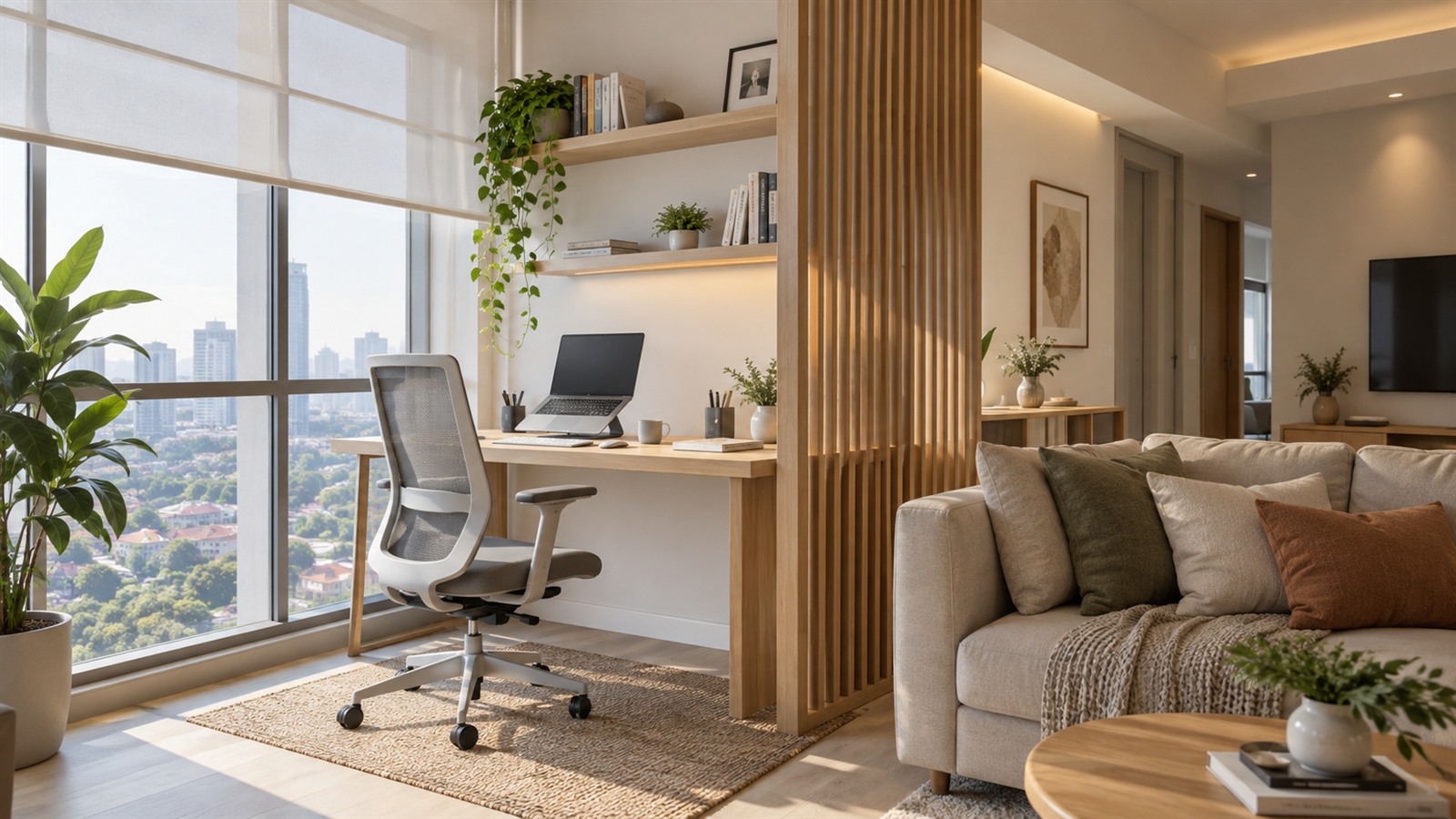
If there is no spare room, look for a corner near a window and a power point. A corner desk or an L-shaped desk makes good use of the space. A bookshelf or a slatted screen can mark the edge of your work zone without building a wall.
Inside a wardrobe or niche
A “cloffice” is a work desk built inside a cupboard. When you finish, you close the doors and the office disappears. This works well in studio units and small condos where the office must share space with living or sleeping.
The balcony, with care
A glassed in balcony can work, but it gets hot in the afternoon and the glare can be harsh. Check with your condo management before closing in any balcony, as many buildings do not allow it.
Get the Desk and Chair Right
The desk and chair matter more than anything else. You will spend hours there, so choose them for comfort first and looks second.
Desk depth. A desk that is too shallow puts the screen too close to your face. Try to leave enough room to push the monitor back to about an arm’s length.
Desk height. Your elbows should rest at about the level of the desk when your shoulders are relaxed. If your desk is fixed, adjust the chair and use a footrest if your feet do not touch the floor.
A good chair. Look for adjustable height, support for your lower back and armrests that move. Try it in the shop for at least a few minutes. Your back will thank you.
Standing desk? An adjustable desk that goes up and down is useful if you work long hours. Make sure the motor and frame fit your space, and leave room for the cables to move.
Screen height. Raise your laptop on a stand and use a separate keyboard and mouse, or add a monitor. The top of the screen should be around eye level.
Storage That Does Not Take Over
In a small office, clutter builds up fast. The trick is to go up, not out.
- Fix shelves above the desk instead of adding a second cabinet on the floor
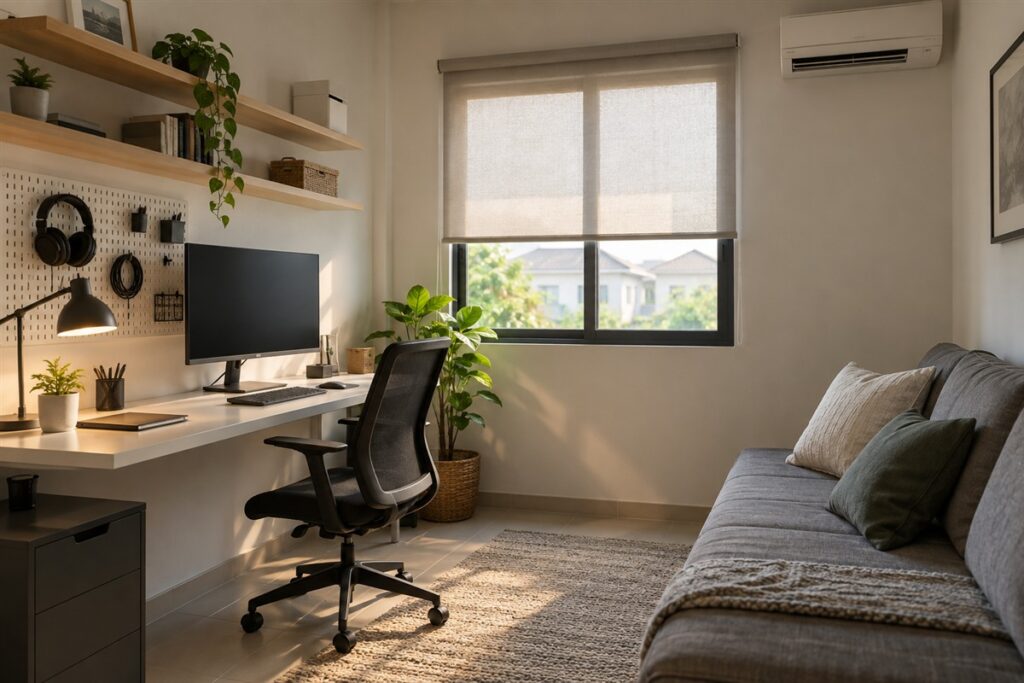
- Use a pegboard or a wall rail for headphones, cables and small tools
- Choose a desk with a slim drawer for stationery
- Add a mobile pedestal that slides under the desk
- Keep only what you use every week in the office; store the rest elsewhere
If the room also works as a guest room, a sofa bed or a wall bed that folds up keeps the floor clear on normal days.
Light, Air and Heat
Malaysian afternoons are hot, and a small room heats up quickly with a computer running.
Natural light
Place the desk beside the window, not facing it or with your back to it. Facing the window causes glare on your eyes; sitting with your back to it causes glare on your screen. Sheer blinds or roller blinds help control the harsh afternoon sun.
Task and background lighting
A desk lamp gives you focused light for reading. For video calls, soft light in front of you is more flattering than one bright light overhead. Neutral white light is good for working; warmer light feels more relaxing at night.
Staying cool
A small aircond unit or a quiet fan is worth planning for. If you install a new aircond, place it so it does not blow straight onto your head or your papers. Plan the position of the pipes and drain before any carpentry goes up.
Wi-Fi, Power and Cables
A lot of home office frustration comes from technology. Deal with it in the design stage, not after.
- Test the Wi-Fi first. Sit in the spot and do a video call. If the signal is weak, a mesh Wi-Fi system or a wired connection can help.
- Plan enough power points. You may need sockets for a laptop, monitor, lamp, phone charger, printer and router. Ask your electrician to add them at desk height.
- Hide the cables. A cable tray under the desk, a cable spine to the floor and a small hole in the desktop keep everything tidy.
- Protect your equipment. A surge protected power strip is a small cost compared with replacing a laptop after a thunderstorm.
Keeping Noise Down
Small homes are noisy. Kids, TV, neighbours and traffic all compete with your calls.
Soft surfaces absorb sound. A rug, fabric curtains, a padded pinboard and a full bookshelf all reduce echo. If the room faces a busy road, thicker curtains or a better window seal can help. A solid door instead of a hollow one also makes a big difference, though you should check with your condo management before replacing it.
For bigger changes, such as acoustic panels or a built-in study wall, an interior consultant like Feiiban can help you plan the layout so the storage, power and lighting all work together.
Drawing a Line Between Work and Home
When the office is in the bedroom or living room, work can easily spill into the rest of your day. A few design habits help you switch off.
- Give work its own zone. A rug, a different wall colour or a pendant light above the desk marks the area as “office” even without walls.
- Close it up. Doors on a niche desk, a curtain across a shelf or a folding screen hide the laptop and papers at night.
- Keep the bed out of view on calls. Turn the desk so your camera sees a shelf, a plant or a plain wall instead.
- Add something personal. A small plant, a family photo or a piece of local art makes the corner feel like part of your home, not a borrowed space.
These small touches cost little but make a real difference to how you feel at the end of a long day.
Your Home Office Questions
How much space do I need for a home office?
Less than you think. A desk, a chair and a little room to push the chair back are the basics. Many people work well in a corner or a niche.
Is it better to face the wall or the room?
Facing into the room often feels more open and gives you a better background for calls. If the room is very small, facing the wall with shelves above can save space.
What colour is best for a small home office?
Soft, light colours like warm white, pale grey or soft green make a small room feel bigger and calmer. Add colour with a chair, art or plants.
Do I need a separate room?
No. A door helps with noise, but a well planned corner with good lighting, storage and a proper chair can work just as well.
Make It a Place You Want to Sit
A good small home office design is not about the latest gadget. It is about a comfortable chair, the right light, enough power points and a tidy place to put things away. Get those basics right and even the smallest corner of a condo can become a place where you do your best work, then close up at the end of the day.