Outdoor Furniture for Malaysian Weather
Choose outdoor furniture in Malaysia that survives hot sun and heavy rain. Compare teak, aluminium, synthetic rattan and concrete, plus cushion and care tips.
The set looked perfect in the shop. Six months later, the chair legs have rust spots, the cushions smell like a wet towel and the table top has turned a strange grey. Anyone who has bought cheap patio furniture in Malaysia has probably lived this story.
Our weather is hard on anything left outside. Strong sun fades colours and dries out wood. Then an afternoon storm soaks everything, and the humidity keeps it damp for days. Add dust, bird droppings and the odd monsoon wind, and you can see why outdoor furniture needs careful choosing.
The good news is that the right materials can last for many years. Here is what to look for, and how to care for it once it is home.
Ask Three Questions Before You Shop
Not all outdoor spaces face the same weather. Before choosing anything, be honest about your space.
- How much direct sun does it get? A west facing balcony in the afternoon is far harsher than a shaded porch.
- Does rain reach it? A covered car porch stays mostly dry. An open garden or rooftop gets soaked.
- How often will you use it? A daily breakfast spot needs comfort. A garden bench you sit on twice a month needs toughness above all.
Your answers decide which materials make sense, how much cushioning you can use and whether covers are a must.
Materials That Can Take the Weather
Each material has strengths and weak points. This table gives a quick overview, and the sections below explain more.
| Material | Sun | Rain | Weight | Care |
|---|---|---|---|---|
| Teak and other hardwoods | Good, turns silver grey | Good | Heavy | Oil or clean now and then |
| Powder coated aluminium | Good | Very good, does not rust | Light | Wipe down |
| Synthetic rattan | Good if UV treated | Very good | Light to medium | Rinse and brush |
| Concrete | Very good | Very good | Very heavy | Seal now and then |
Teak and Other Hardwoods
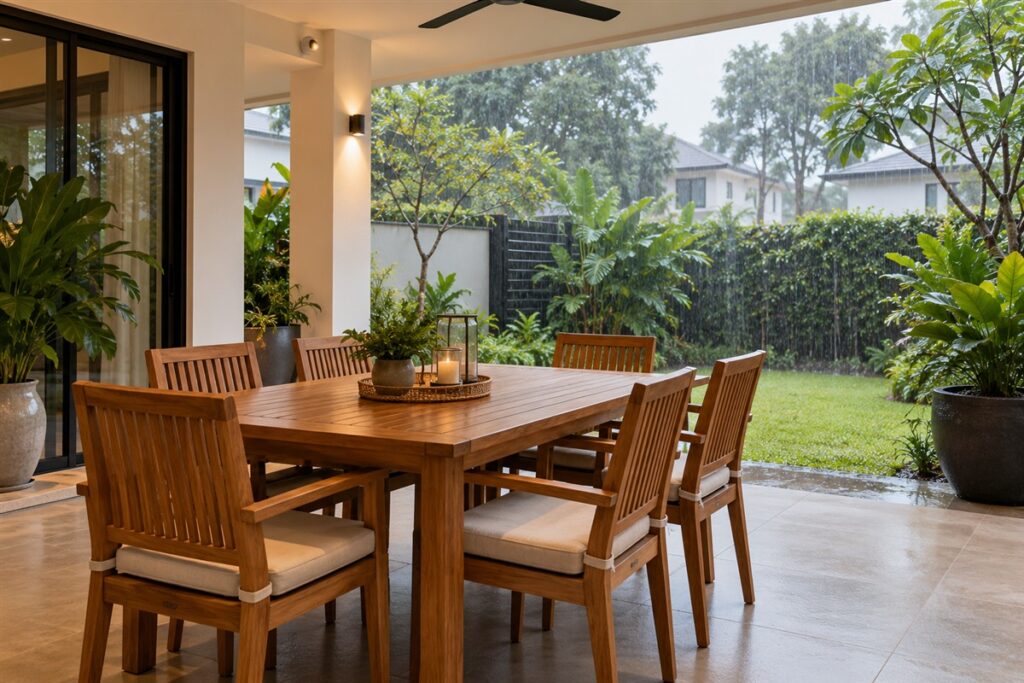
Teak is a classic for good reason. It is dense and naturally oily, so it resists rot and insects better than most woods. Other tropical hardwoods can also do well outdoors when they are properly dried and finished.
Left untreated, teak slowly fades to a soft silver grey. Some people love this look. If you prefer the warm honey colour, clean it and apply a teak oil or sealer every few months. Ask the seller about where the wood comes from and how it was dried, as poorly dried wood can crack in the heat.
Powder Coated Aluminium
Aluminium does not rust the way iron and steel do, which makes it ideal for our wet climate. A powder coated finish adds colour and an extra layer of protection.
It is light, so it is easy to move around and suits condo balconies where you cannot carry heavy pieces up in the lift. The flip side is that very light chairs can shift in strong wind on high floors. Choose pieces with some weight to them, or keep them close to the wall.
Be careful with cheaper “metal” furniture that is actually painted steel. Once the paint chips, rust starts quickly.
Synthetic Rattan
Synthetic rattan, sometimes called resin wicker, is woven plastic fibre on a metal frame. It gives the relaxed look of natural rattan but can handle rain much better.
Quality varies a lot. Good synthetic rattan is UV treated so it does not crack or fade in the sun, and the frame underneath is aluminium rather than steel. Press the weave with your hand in the shop. It should feel firm and springy, not brittle or loose.
Concrete
Concrete tables, benches and planters are almost impossible to damage. They do not blow away, rot or rust. They suit gardens, rooftops and modern landed homes.
The downsides are weight and heat. Concrete is very heavy, so plan where it will go before delivery. It also gets hot in direct sun, so add shade or cushions if people will sit on it. A sealer helps prevent stains and moss in damp corners.
Mixing Materials
You do not have to pick just one. Many of the best outdoor setups combine materials. A concrete or hardwood table gives weight and stability, while aluminium or synthetic rattan chairs keep things light and easy to move. Matching the colours, such as warm wood with dark grey metal, makes a mixed set look planned rather than random. Just make sure every piece in the set is truly made for outdoor use, not only the main ones.
Cushions and Fabric
Cushions are often the first thing to fail. Indoor fabric and normal foam soak up water like a sponge and grow mould in our humidity.
Look for these details:
- Outdoor fabric made from solution dyed acrylic or polyester, which resists fading and dries quickly
- Quick dry foam, which has an open structure that lets water drain through instead of holding it
- Removable covers with zips, so you can wash them
- Light or mid tone colours, since dark fabrics get hot and show fading faster
Even with good materials, the simplest habit is to bring cushions inside or store them in a waterproof box when rain is coming. Stand wet cushions on their edge in the shade to dry, not flat in the sun.
Covers and Shelter
Covers add years to most outdoor furniture. Choose ones that are waterproof but breathable, with small vents. Fully sealed plastic covers trap moisture underneath, and in our heat this can lead to mould.
Make sure the cover fits well and can be tied down, or it will blow off in the first storm. Remove it after heavy rain on a sunny day so everything can air out.
Shelter is even better than a cover. An awning, a pergola with a roof, a large umbrella or simply placing furniture under the roof overhang reduces sun and rain damage a lot. For landed homes, check with your local council before building any permanent roof structure.
Care Through the Year
Outdoor furniture needs a little attention, but not much.
Every week or two: brush off leaves and dust, and wipe away bird droppings quickly, as they can stain.
Every month or so: wash frames and synthetic rattan with mild soapy water and a soft brush. Rinse well and let it dry.
Before and after monsoon season: check screws and bolts, tighten anything loose, and look for rust spots or cracks. Re oil teak if you want to keep its colour, and reseal concrete if water no longer beads on the surface.
Keep furniture feet off standing water. Small rubber or plastic pads under each leg help the base dry faster and protect tiles.
Balcony or Patio: Different Needs
Condo Balcony Furniture
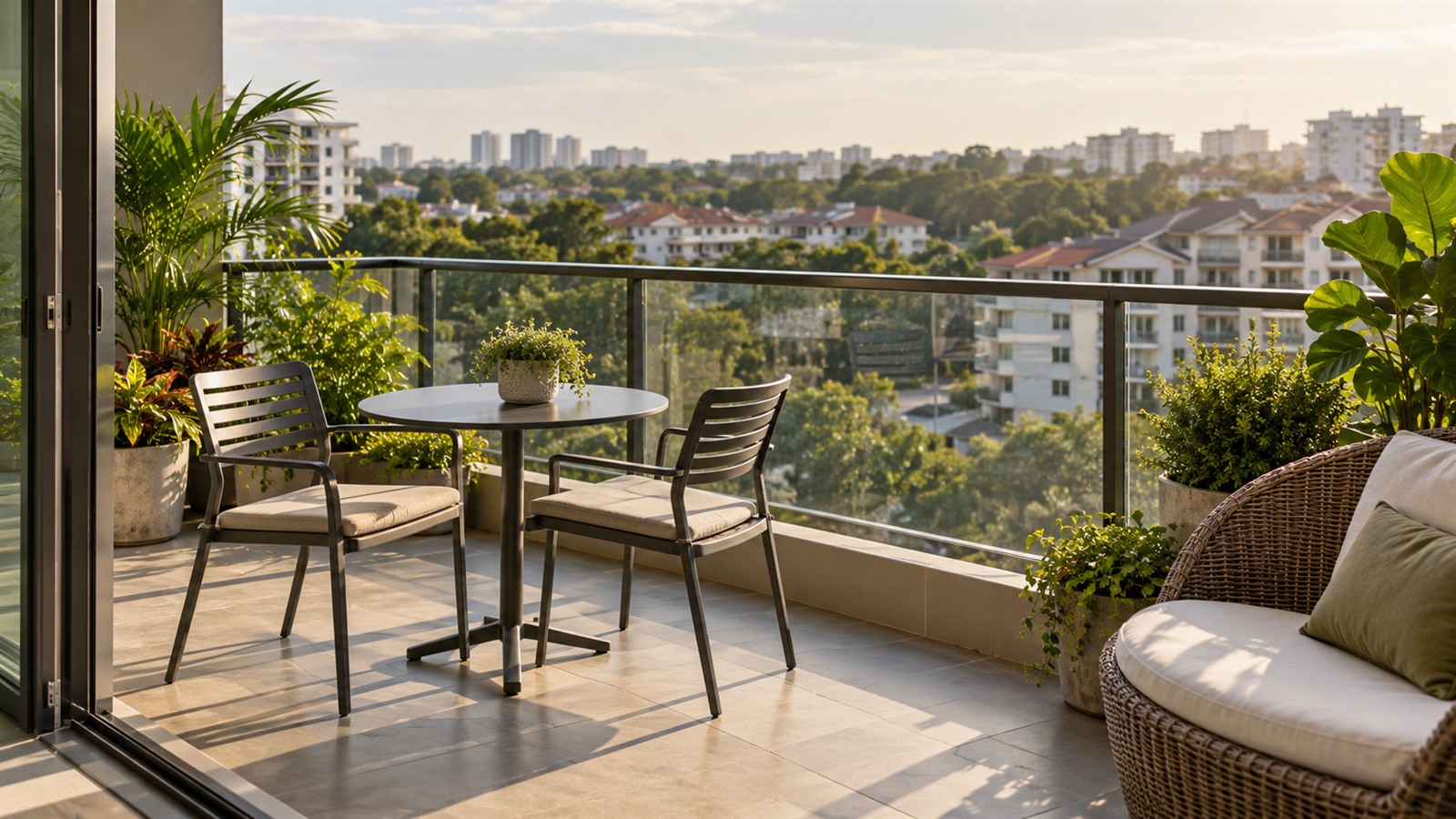
Balconies are usually small, high up and windy. Choose light but stable pieces, foldable chairs and a narrow table that leaves room to walk. Measure the space carefully, including the swing of the sliding door.
Check with your condo management about what is allowed. Many buildings have rules on items placed near the railing and on how the balcony looks from outside. Avoid anything a child could climb on next to the railing.
Patio and Garden Furniture
Landed homes have more space and less wind, so you can go bigger. A full dining set, a lounge corner with deep seats or a solid concrete bench all work. Think about drainage: the floor should slope slightly so rain flows away from the furniture.
Common Outdoor Furniture Questions
What is the best outdoor furniture material in Malaysia?
There is no single best. Teak, powder coated aluminium, good synthetic rattan and concrete all handle our weather well. Pick based on sun, rain, weight and the look you want.
Can I leave outdoor furniture in the rain?
Most proper outdoor frames can handle rain, but cushions should come in or be covered. Dry everything well afterwards to avoid mould.
Why is my outdoor furniture rusting?
It is probably painted or coated steel. Once the coating is scratched, moisture reaches the metal. Aluminium frames avoid this problem.
How much should I budget for outdoor furniture?
It depends on the material, size and finish. Compare at least three written quotes that list the same items, sizes and materials.
Buy for the Storm, Not the Showroom
The best outdoor furniture for Malaysia is chosen for the worst day of the year, not the nicest. Pick materials that can handle sun and rain, use proper outdoor cushions, add a cover or some shelter, and give it a quick clean now and then. Do this, and your balcony or patio will stay a place you actually want to sit.