Robot Vacuum Guide for Malaysian Homes
Choosing a robot vacuum in Malaysia? Compare vacuum only vs vacuum and mop, self emptying docks, mapping, sofa clearance, pets and care in humid weather.
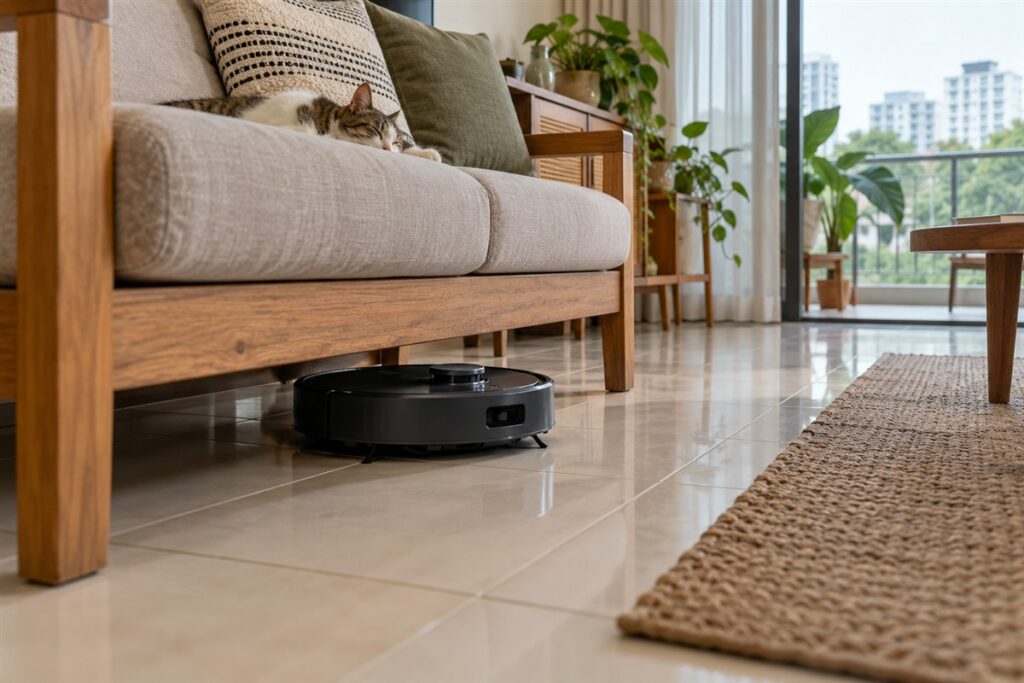
Lift up the sofa in most Malaysian homes and you will find the same things. Dust, a lost hair clip, some cat fur, and maybe a piece of keropok from last Raya. The floor in the middle of the room looks clean. The edges and the hidden spots tell a different story.
This is where a robot vacuum earns its place. It works quietly while you are at the office, reaches under beds you never move, and keeps fine dust and hair under control between deep cleans. But not every robot suits every home. Height, floor type, pets and our humid weather all change what you should look for.
Start with a tape measure, not a shopping app.
Measure Your Home Before Anything Else
The most common regret with a robot vacuum is simple. It does not fit where the dirt is.
Walk around your home and check these spots:
- Under the sofa. Measure the gap between the floor and the bottom of the frame.
- Under beds and bed frames. Platform beds with storage may have no gap at all.
- Under the TV console and sideboard. These are dust traps.
- Door thresholds and floor strips. Note any raised edge between rooms, especially at the bathroom, balcony and kitchen.
- Tight corners. Look at the space between dining chairs, around the shoe cabinet and behind doors.
Compare the lowest gap with the height of the robot you like. Remember that some robots have a raised sensor on top, which adds height. If the gap is very close, the robot may get stuck under the furniture.
If you are buying new furniture, think ahead. Choosing sofa and bed legs with enough clearance makes cleaning easier, robot or not.
Vacuum Only or Vacuum and Mop?
This is one of the big choices.
Vacuum only
A vacuum only robot focuses on dust, crumbs, sand and hair. It is usually simpler, lighter and easier to maintain. It suits homes with lots of rugs, or families who already mop by hand every few days.
Robot vacuum and mop
A robot vacuum and mop adds a water tank and a mopping pad. It wipes the floor after vacuuming, picking up the fine dust that sticks to tiles in our climate. In Malaysian homes with large tiled areas, this can make the floor feel much cleaner underfoot.
Mopping types vary. Some simply drag a damp pad. Others press or spin the pad for better scrubbing. Some can lift the mop when they reach a rug, so it does not get wet. If you have rugs, this matters a lot.
Keep in mind that a robot mop is for daily light cleaning. Sticky spills in the dining area or oily marks near the kitchen still need a proper mop.
Docks: Charging, Self Emptying and More
Every robot returns to a dock to charge. Beyond that, docks can do extra jobs.
A self emptying dock sucks the dirt out of the robot into a larger bag or bin. You only empty the dock now and then, instead of emptying the small robot bin after every run. This is useful for homes with pets or long hair.
Some docks also wash and dry the mop pads and refill the water tank. These are bigger and need a nearby power point and some floor space. They can save a lot of hands on work, but they also add parts to clean.
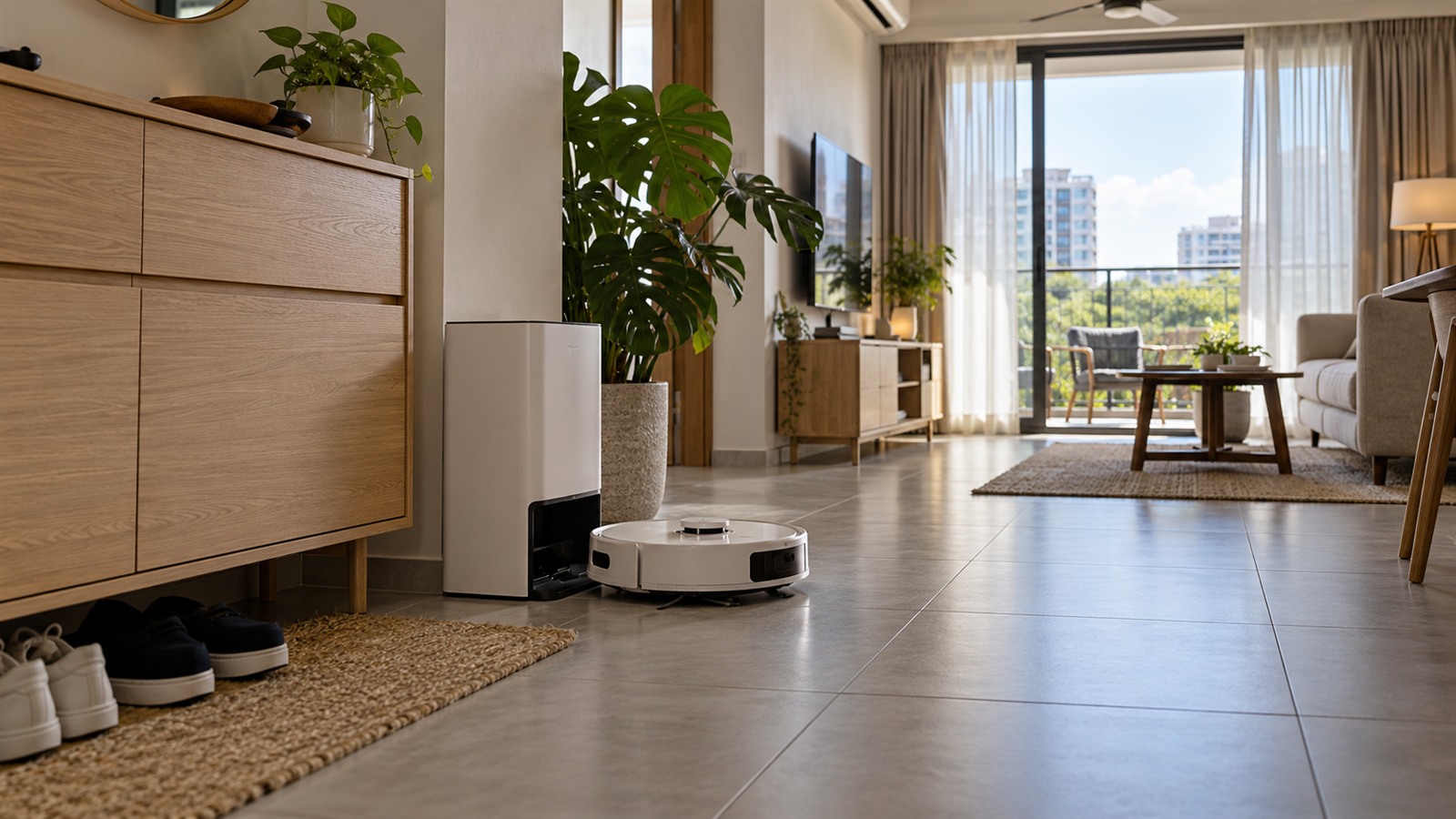
Find a spot for the dock before you buy. It needs open space in front so the robot can return easily, and it should not block a walkway. Many people place it beside the shoe cabinet, in a corner of the living room or under a console with enough height.
Mapping and Smart Features
Older robots moved in random patterns. Many newer ones build a map of your home and clean in neat lines. Mapping helps in several ways:
- You can send the robot to clean one room, like the kitchen after dinner
- You can set no go zones, such as around the pet bowl or a pile of cables
- The robot can find its way back to the dock more reliably
- You can schedule different rooms on different days
In a terrace house or semi-D with more than one floor, check how the robot handles several maps. You will still need to carry it upstairs, but it can remember each floor.
Obstacle avoidance is also worth a look. Some robots can spot and go around socks, cables and pet mess. This makes life easier in a busy family home.
Tiles, Timber and Rugs
Most Malaysian homes have tiles, vinyl or laminate, sometimes with a few rugs. Robots handle hard floors well. Rugs are where the differences show.
Thin rugs are usually fine. Thick, shaggy rugs or rugs with long tassels can tangle the brushes or stop the robot. If you love a plush rug, mark it as a no mop zone and check that the robot can climb onto it.
For timber or laminate, use a lightly damp mop setting rather than a very wet one, and check the floor maker’s cleaning advice.
Living With Pets
For homes with cats or dogs, look for features that help a robot vacuum for pet hair:
- A brush design that resists hair tangling
- Strong suction for fur that sinks into rugs
- A self emptying dock, so the small bin does not fill up mid clean
- Obstacle avoidance, so the robot steers around accidents
Pet bowls are another hazard. A robot that bumps a water bowl can spread a puddle across the floor, then drag wet fur into every room. Place bowls on a tray, or set a no go zone around the feeding corner in the app. Litter boxes need the same care, since loose litter can jam brushes.
Some pets are curious or scared at first. Run the robot while you are home for the first few times so they can get used to it.
Care in Humid Weather
Our humidity is hard on any cleaning machine. A robot with a damp mop pad and a bin full of dust can start to smell if left alone.
Make a simple routine:
- Empty the bin and wipe it dry often
- Wash and fully dry the mop pad after each mop run, ideally in a ventilated spot
- Clean hair from the brushes every week or so
- Wipe the sensors with a dry cloth so the robot does not bump into things
- Replace filters and brushes when they wear out
If the robot lives near a balcony or in a wet kitchen, keep it away from water splashes. During the monsoon season, wet shoes and umbrellas near the door can leave puddles, so set the robot to skip the entrance on rainy days or clear the floor before a run. A quick tidy of cables and toys before each run also helps it clean more of the floor.
Cost depends on suction, mopping type, dock features, mapping and obstacle avoidance. Get at least three written quotes or price lists that compare the same features and included spare parts.
Robot Vacuum Questions
Can a robot vacuum replace manual cleaning?
It reduces daily dust and hair a lot, but you will still need to deep clean, mop sticky spots and clean high surfaces now and then.
Is a self emptying dock worth it?
It helps most in homes with pets, long hair or large floor areas. For a small condo with light dust, a basic dock may be enough.
Will it work in a home with many rooms and steps?
Mapping robots handle many rooms well. Cliff sensors stop most robots from falling down stairs, but they cannot climb them, so you will carry it between floors.
How often should I run it?
Many families run it daily or every other day. Homes with pets or near busy roads may want it more often.
Let the Robot Handle the Daily Dust
A robot vacuum works best when it fits your furniture, your floors and your routine. Measure first, decide on mopping, choose a dock that suits your space and set a simple cleaning habit for humid weather. Then let it take care of the daily dust while you get your weekends back.