Café Interior Design Ideas
Cafe interior design ideas for Malaysian owners: layout flow, the counter, seating mix, lighting, photo spots, tough materials, and aircond or outdoor seating.
You have found the shop lot. The coffee machine is ordered, the menu is almost ready, and a friend has already offered to paint a mural. Then the contractor asks a simple question: where does the queue go?
Many new café owners in Malaysia start with the look they want and only think about how the space works later. But a café is a small factory as much as it is a pretty room. Staff need to move fast, customers need to order without confusion, and the space has to survive spilled drinks, humid weather and chairs being dragged across the floor all day.
Good cafe interior design balances all of this. Here are the ideas that matter most, in roughly the order you should think about them.
Map the Flow Before the Style
Picture a customer walking in. Where do they look first? Where do they stand to read the menu? Where do they order, pay, wait and collect? Then where do they sit, and how do they find the washroom?
Now picture your barista and kitchen staff. They need a clear path from the storeroom to the bar, from the kitchen to the pass, and from the tables back to the dishwashing area.
The two paths should cross as little as possible. A common problem in small cafés is the queue blocking the pickup point, so people waiting for orders stand in the way of people trying to pay.
A simple way to plan:
- Put the entrance, menu board, order point and pickup point in a logical line.
- Leave space for a queue that does not spill into the seating area or out the door.
- Keep the dishwashing and rubbish route away from the main seating.
- Place the washroom where customers can find it without walking through the kitchen.
Sketch this on paper first, even roughly. It will save you from expensive changes later.
The Counter Is Your Stage
The counter is where your customers spend their first few minutes, and where your staff spend the whole day. Treat it as both a work station and a display.
On the staff side, think about the height of work surfaces, the position of the coffee machine and grinder, fridges under the counter, sinks, and enough power points for every appliance. Ask your barista to walk through a busy morning with you. They will know where things should sit.
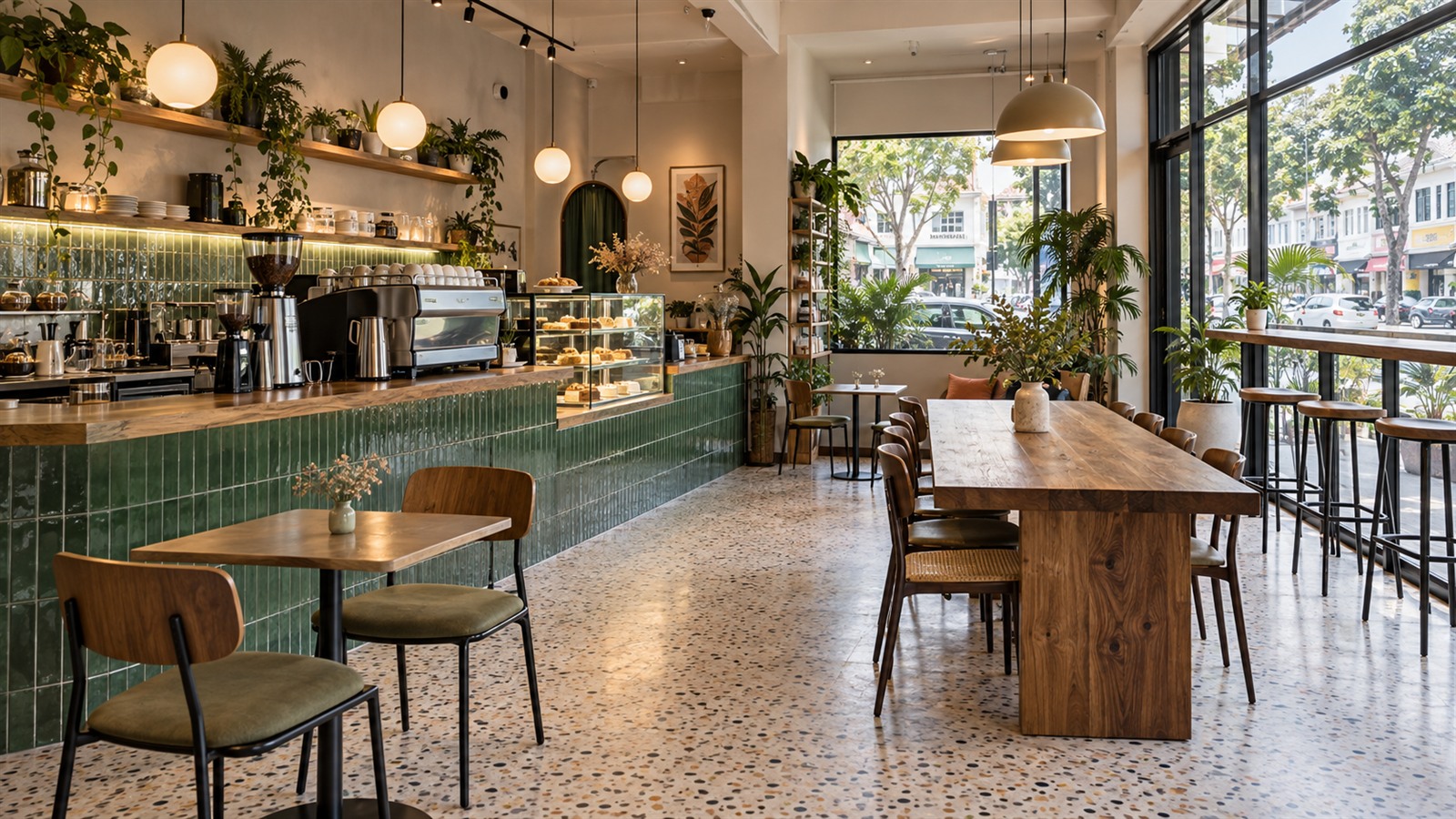
On the customer side, the counter front is one of the most photographed surfaces in the café. Tiles, fluted timber, terrazzo, or a simple painted finish with your logo can all work well. Keep a display for cakes and pastries at eye level, close to the order point, so people see them just before they pay.
Seating: Mix It Up
Different customers want different seats. Students with laptops want a table near a power point. Couples want a small table for two. Families need space for a stroller. Office workers on a quick break want a bar stool by the window.
A good seating mix might include:
- Two seater tables that can be pushed together for groups.
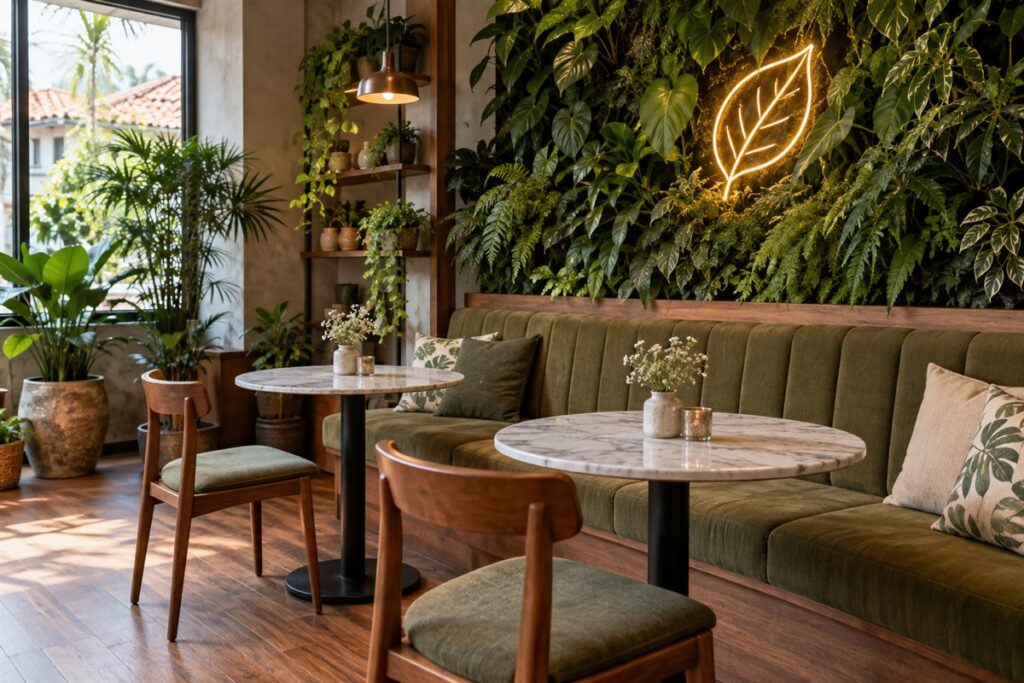
- Banquette seating along a wall, which fits more people in less space.
- Bar counters facing windows or a wall, good for solo customers.
- A large communal table for groups and laptop users.
- A few armchairs or low seats for people who want to stay longer.
Think about how long you want people to stay. Very comfortable seats encourage long visits, which suits a slow weekend café. Harder stools and smaller tables suit a busy grab and go spot near offices.
Leave enough space between tables for staff carrying trays, and for customers to pull out chairs without bumping the table behind.
Lighting That Works Day and Night
Lighting changes how your café feels and how your food looks in photos.
Use daylight during the day. Keep front windows clear so passersby can see inside. In the evening, warmer lights make the space cosy. Pendant lights over tables create small pools of light that feel intimate. Brighter, even light is needed at the counter and in the kitchen so staff can work safely.
Avoid harsh cold lighting in the seating area, and check how your lights look on food. A dish that looks great on the pass can look dull under the wrong bulb.
Designing a Photo Spot
For many cafés in Malaysia, social media is a big part of marketing. Customers who post photos of your space are doing free promotion. Give them a reason to.
A photo spot does not need to be expensive. Ideas include:
- A feature wall with your café name in neon or painted letters
- A wall of plants or a hanging garden
- A bold tiled floor pattern near the entrance
- A window seat with good natural light
- An interesting ceiling detail, such as timber slats or a curved plaster feature
Place it where the light is good and where people taking photos won’t block service. Keep the style consistent with your brand, so every photo helps people remember you.
Materials That Survive Real Life
A café takes a lot of wear. Coffee spills, sauces, humidity, mopping every night and furniture moving all day. Pick materials for durability first, then for looks.
Good choices:
- Floors: porcelain tiles, vinyl planks made for commercial use, or polished concrete with a proper sealer.
- Tabletops: laminate, solid surface or sealed timber. Stone looks lovely but may stain from coffee and oil.
- Walls: washable paint near seating, tiles behind the counter and in the kitchen.
- Upholstery: fabric or faux leather that can be wiped clean.
Also plan for grease. If you fry food, the kitchen needs proper ventilation and easy to clean surfaces. Your local council and health authorities will have requirements for food premises, so ask your contractor or designer to check these before you finalise the kitchen.
Aircond Indoors or Seats Outside?
This is a common question for café owners here. Both have pros and cons.
Aircond seating is comfortable all day and suits laptop users and long visits. It also costs more to run, and the aircond needs to be sized for the space and the heat from the kitchen and coffee machine.
Outdoor seating costs less to fit out and is popular in the cooler evenings. It suits smokers and people with pets. But it is weather dependent. Heavy rain, strong sun and haze can empty it quickly. Ceiling fans, a proper roof or awning, and plants for shade help a lot. Ask the local council if you are allowed to place tables on the walkway in front of your shop.
Many cafés do both: an air conditioned main space with a small shaded area outside.
Keeping the Budget Under Control
Café fitout costs vary widely. What affects the price:
- The condition of the shop lot when you get it
- Kitchen equipment, exhaust and plumbing
- Counter and custom furniture
- Aircond, electrical and lighting works
- Flooring, ceiling and wall finishes
Get at least three written quotes with the same items listed, so you compare fairly. Directories like Renovation Pages can help you find contractors who have done food and beverage projects before.
Café Owner FAQ
How much space do I need for a small café?
It depends on your menu and seating. A coffee focused café with a small kitchen needs far less space than a full brunch menu. Plan the kitchen and counter first, then see how many seats fit.
Should I hire a designer for a small café?
For a simple takeaway kiosk, you might not need one. For a sit down café, a designer can help with flow, lighting and branding, which affect how customers feel and how staff work.
How do I make a small café feel bigger?
Use light colours, mirrors, clear front windows and furniture with slim legs. Keep the counter area tidy and avoid too many different materials.
What is the most common design mistake?
Forgetting the staff side. A beautiful café that is slow to serve customers will struggle.
Design for the Morning Rush
The best cafés look good in photos and still run smoothly on a busy Saturday morning. Plan the flow first, give the counter the attention it deserves, mix your seating, and choose materials that can take the daily wear.
Get these basics right, and your cafe interior design will keep working for your business long after opening day.