Japandi Interior Design for Malaysian Homes
A practical guide to japandi interior design in Malaysia. Learn the colours, materials and furniture that work in humid condos and landed homes.
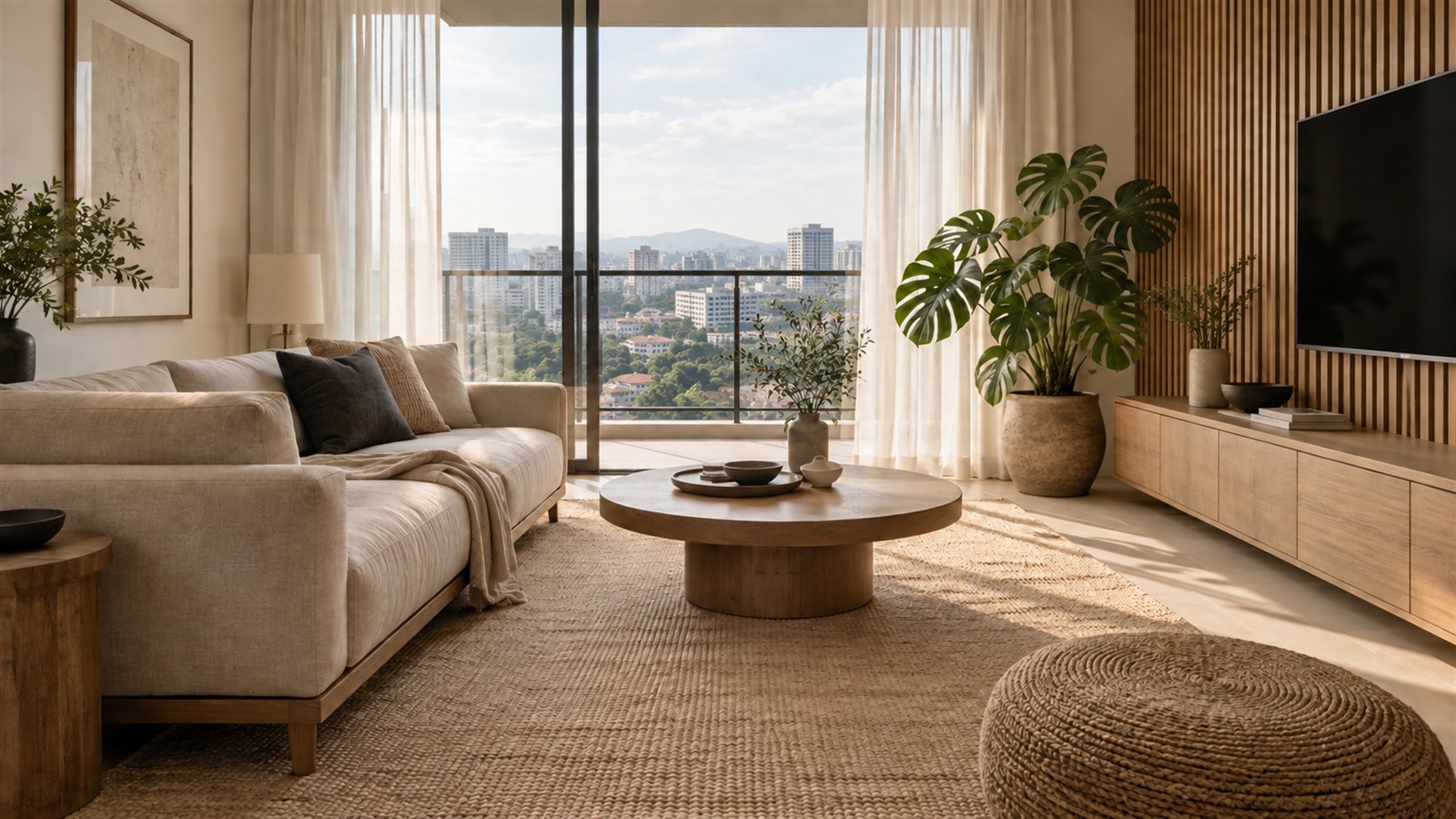
You have seen the photos. A low wooden bench, a linen sofa in soft beige, one ceramic vase with a single branch, and plenty of empty space. It looks calm, and after a long day stuck in KL traffic, calm is exactly what you want.
Then you look at your own living room. School bags on the sofa, a tangle of charger cables, and a shoe rack that has taken over the front door. Can that picture really work here?
It can. Japandi interior design mixes the quiet order of Japanese homes with the warm, simple comfort of Scandinavian ones. With a few changes for our heat, humidity and busy family life, it suits Malaysian condos and landed homes very well.
Why This Style Fits Malaysian Life
Japandi is built on a simple idea: own fewer things, but choose each one with care. That idea matters a lot in Malaysia, where many condo units are compact and storage is always short.
The style also leans on natural light, airflow and natural materials. Our homes get strong daylight most of the year, so a light, open room feels bright without much effort. And because the look is so plain, it does not date quickly. You will not feel the need to redo everything in a few years.
Most of all, Japandi makes a home easier to clean. Fewer items on display means less dust to wipe, which anyone living near a busy road will appreciate.
The Colour Palette
Japandi uses soft, earthy colours. Think of sand, clay, oat, warm grey, stone and muted green. Dark accents in charcoal or deep brown add depth so the room does not look flat.
A simple way to plan colour:
- Walls: warm white, off white or light greige. Avoid bright, cold white, which can feel harsh under strong sunlight.
- Large furniture: beige, light grey or soft brown fabric.
- Wood: light oak, ash or rubberwood tones, with one or two darker pieces for contrast.
- Accents: black metal, charcoal ceramics or a deep olive cushion.
Keep patterns quiet. Texture does the work instead, through linen, rattan, wood grain and handmade pottery.
Materials That Can Handle Our Humidity
This is where Malaysian homes need the most care. Photos from colder, drier countries often show raw wood, open weave rugs and paper screens everywhere. In our climate, those can grow mould, warp or attract insects if you are not careful.
Wood
Solid wood and good veneer both work, but they must be properly sealed. Ask your carpenter about a finish that resists moisture. For kitchen and bathroom cabinets, a wood look laminate or compact board is often the smarter choice. You get the same warm look without swelling.
Fabrics
Linen and cotton fit the style and breathe well in hot weather. Pick slipcovers you can remove and wash. Heavy wool throws, common in Scandinavian homes, are usually too warm here.
Rattan and Cane
Rattan and cane are a happy match for Japandi, and they feel at home in a tropical house. Keep them away from wet areas and give them good airflow so mould does not form in the weave.
Floors
Many Japandi rooms have wooden floors. In Malaysia, vinyl plank or wood look porcelain tiles are popular because they cope better with humidity and mopping. They give a similar warm feel.
Furniture: Low, Simple and Useful
Japandi furniture sits low to the ground, with clean lines and gentle curves. Every piece should earn its place.
Good choices include:
- A low sofa with thin arms and wooden legs
- A solid wood or wood look coffee table with rounded corners
- A platform bed with a simple headboard
- A long, low media console with closed doors
- A dining table with a bench on one side
Try to keep legs visible under furniture. The gap makes the room feel lighter and also makes mopping under it much easier.
For many homeowners, built-in carpentry is the best way to get a clean Japandi look. Full height cabinets with flat doors and hidden handles swallow clutter and keep walls calm.
Light the Room Softly
Lighting can make or break this style. Harsh white downlights all over the ceiling will flatten even the nicest wood and linen.
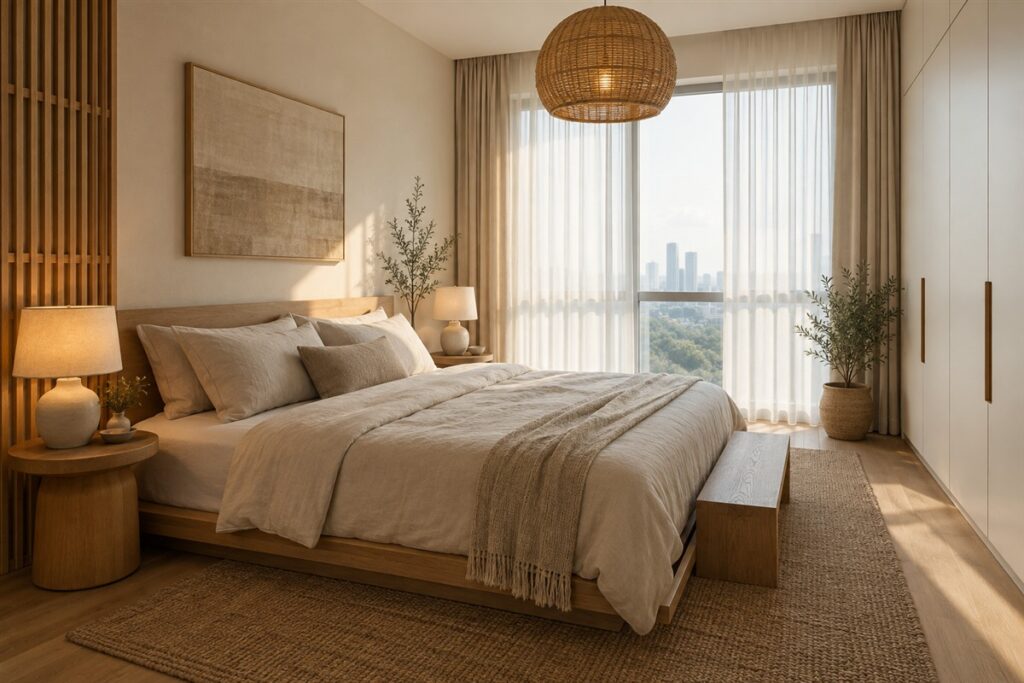
Use warm white bulbs in most rooms. Add layers: a ceiling light for general use, a floor lamp or table lamp with a paper or fabric shade, and hidden LED strips under shelves or behind a slat wall. Dimmers are worth it, especially in the living room and bedroom. During the day, sheer curtains soften the strong tropical sun and spread it gently across the room.
Room by Room Ideas
Living Room
Pick one focal point, such as a textured feature wall with wooden slats or a large plant in a clay pot. Keep the TV wall simple with closed storage below. Use a jute or cotton rug in a neutral tone, and limit display items to a few pieces you love.
Bedroom
Aim for a room that helps you rest. Use a low bed, soft linen sheets and a small bedside table on each side. Hide wardrobe clutter behind flat sliding doors. Warm, dimmable lighting makes a big difference at night.
Kitchen
Flat cabinet doors in light wood tones or soft grey fit the style. A quartz or solid surface top in warm white keeps things clean. If you have a wet kitchen at the back, it can stay practical. Save the Japandi look for the dry kitchen that faces the living area.
Entrance
Malaysian homes take shoes off at the door, just like Japanese homes. A slim shoe cabinet with a bench on top and a few hooks keeps the entrance neat from the first step.
Adapting Japandi for Condos and Landed Homes
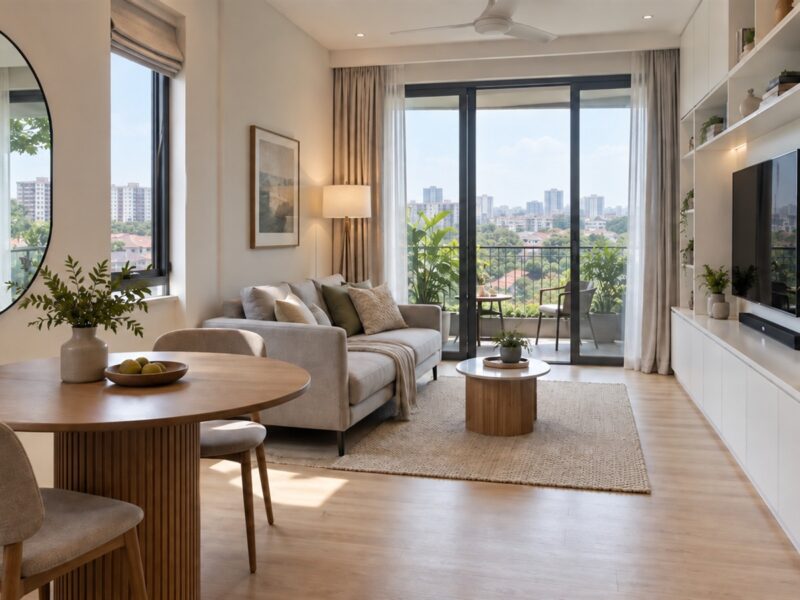
In a condo, space is limited, so focus on storage and light. Use full height built-in cabinets, mirrors, and sheer curtains that let daylight in while softening the glare. A wooden slat screen can separate the living and dining areas without blocking air.
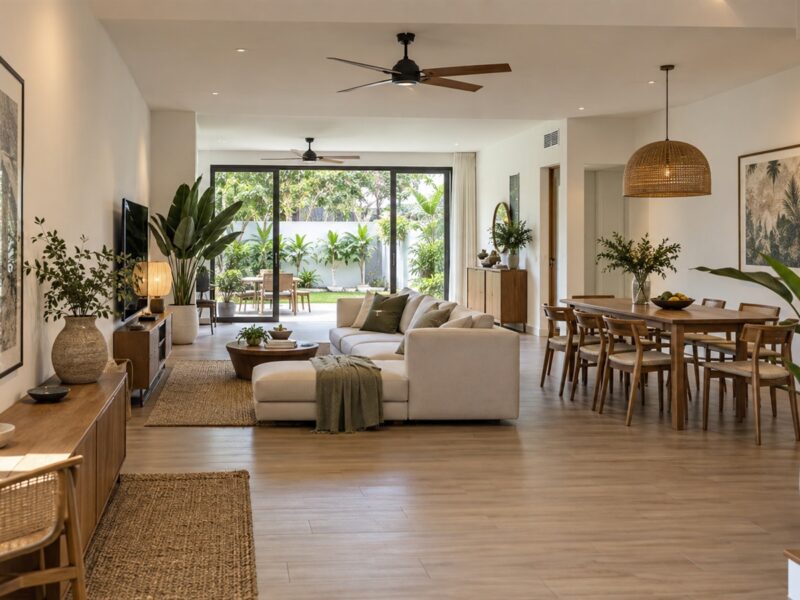
In a terrace house or semi-D, you have more room to play. Consider wooden slat panels on the staircase, a small indoor garden near the air well, or sliding doors that open the living room to the back yard. Landed homes can also take a few larger, darker wood pieces without feeling heavy.
In both cases, plan for airflow. Ceiling fans, cross ventilation and aircond placed out of sight help keep the room cool and the materials in good shape.
What Affects the Cost
There is no fixed price for a Japandi makeover. The cost depends on several things:
- How much built-in carpentry you need
- Solid wood versus veneer versus laminate
- If you change floors, ceilings or lighting
- How many pieces of loose furniture you buy
- If any walls need to be hacked or built
Get at least three written quotes for the same list of items. That way, you compare like with like instead of guessing.
Your Japandi Questions Answered
Is Japandi the same as minimalist design?
Not quite. Both avoid clutter, but Japandi feels warmer. It uses more natural wood, texture and soft colour, while pure minimalism can feel cold and bare.
Will Japandi look too plain?
It can if every surface is the same colour. Mix light and dark wood, add texture with linen and rattan, and bring in plants. That keeps the room calm but interesting.
Can I do Japandi on a small budget?
Yes. Start by clearing clutter and repainting in a warm neutral. Then swap a few items, such as cushion covers, lighting and one good wooden piece. Carpentry can come later.
Which plants suit a Japandi home in Malaysia?
Choose plants that like indoor light and humidity, such as snake plants, rubber plants or monstera. A few large pots look better than many small ones.
Bringing It Home
Japandi is less about following a strict rule book and more about living with less, but better. Choose warm neutral colours, natural materials that can handle our humidity, and furniture that is simple and useful. Hide the clutter, let the daylight in, and your home will feel calmer every time you walk through the door.