Plaster Ceiling Design Ideas
Plaster ceiling design ideas for Malaysian homes: L box, cove lighting, drop ceilings and bulkheads, where to use each, plus tips on cracks and humidity.
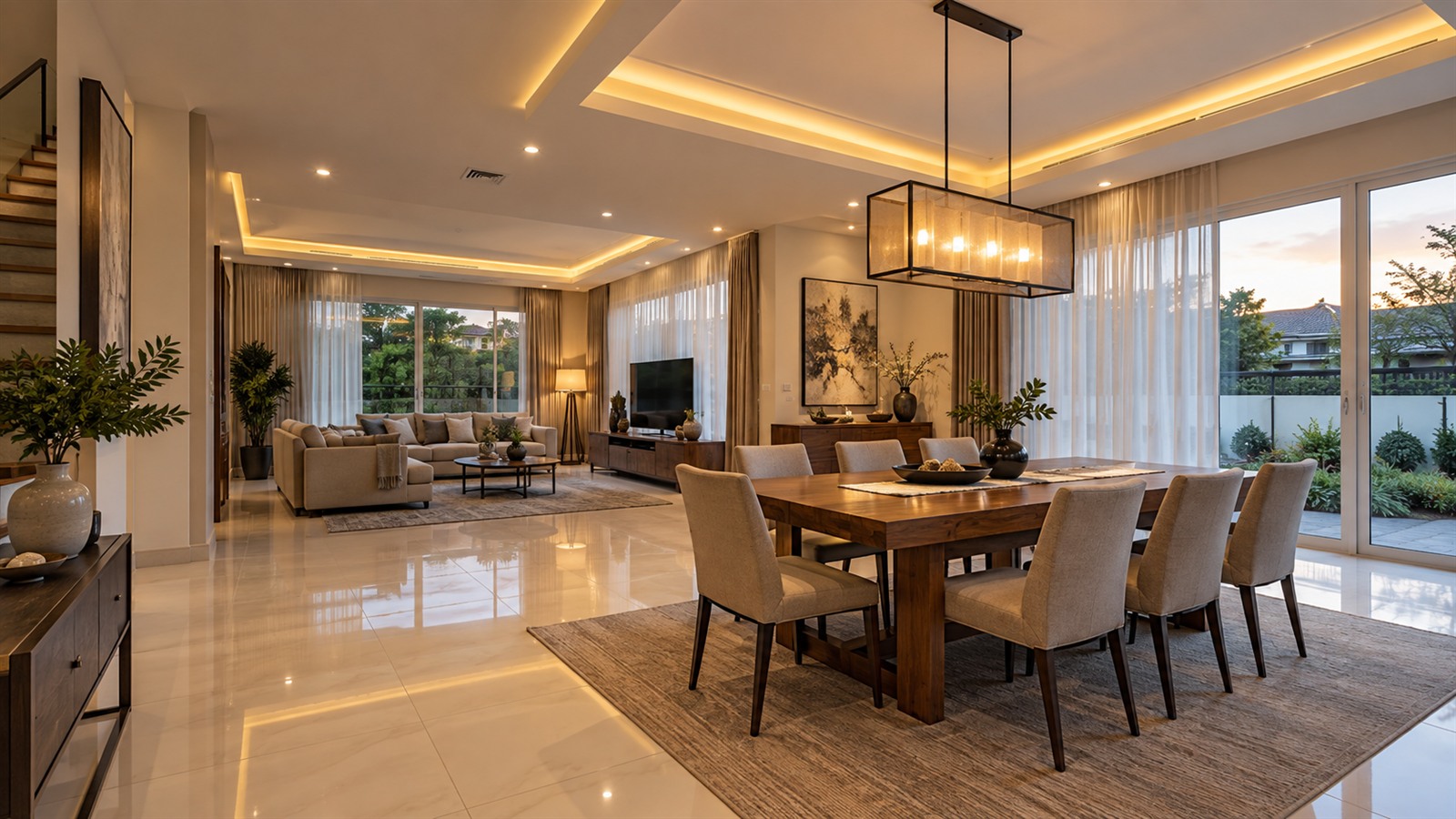
Lie on your sofa and look up. In many Malaysian homes you will see one of two things. Either a flat, plain ceiling with a single light in the middle, or a ceiling crossed by aircond pipes and a trunking box that nobody quite knows what to do with.
A well planned plaster ceiling fixes both. It hides pipes and wiring, gives you better lighting options and can make a room feel taller, cosier or more finished. It is one of the most useful upgrades in a renovation, and one of the most visible.
This guide walks through the main plaster ceiling design styles, where each one works best, and how to keep your ceiling looking good in our hot, humid weather.
Why a Plaster Ceiling Is Worth Considering
The bare concrete slab in most homes is not pretty, and it is hard to add new lighting to it. A plaster ceiling hangs below the slab on a light frame, which creates a hidden space above.
That hidden space is useful. It can hold:
- Wiring for downlights, pendant lights and LED strips
- Aircond piping and drain pipes
- Cable for Wi-Fi access points, speakers or cameras
- Insulation to help reduce heat, especially on the top floor of landed homes
Plaster ceilings are also easy to shape. You can create steps, curves, recesses and hidden lighting that a bare slab cannot give you.
The Main Plaster Ceiling Styles
L box ceiling
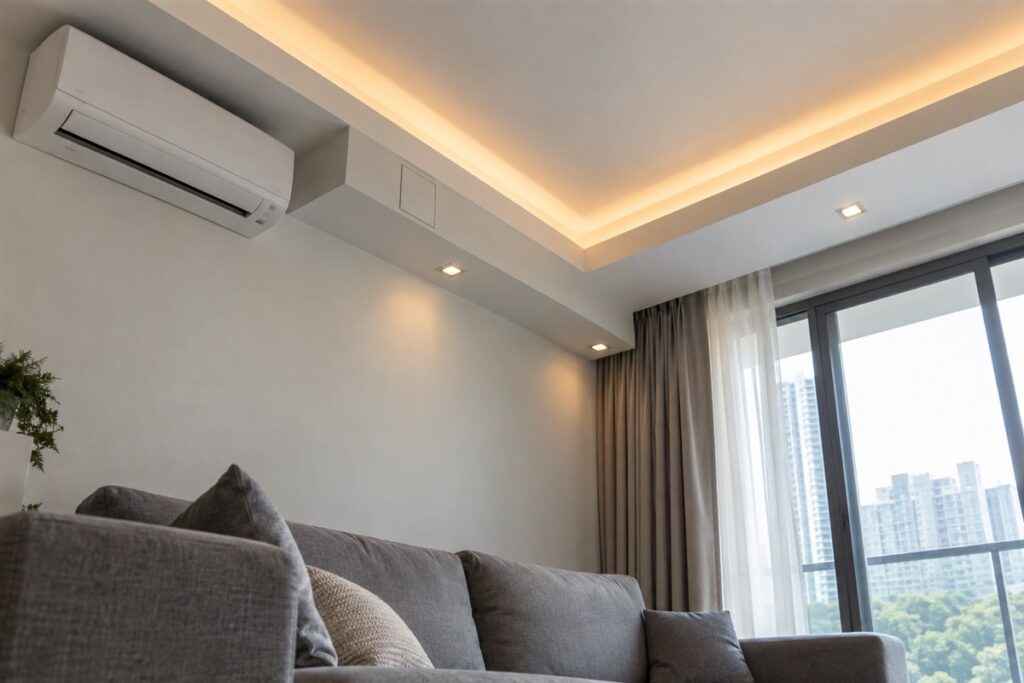
The L box runs along one or more edges of the room, dropping down in an L shape when you see it from the side. The middle of the ceiling stays higher.
This style is popular in living rooms and bedrooms because the lower edge can hide pipes or wiring, while the higher middle keeps the room feeling open. You can add downlights in the L box and leave the centre clean.
Cove lighting ceiling
A cove ceiling has a hidden ledge with an LED strip tucked inside. The light washes softly across the ceiling instead of shining straight down.
Cove lighting creates a warm, relaxing glow. It works well in living rooms, master bedrooms and dining areas where you want mood lighting in the evening. Keep the strip warm white for a homely feel. Make sure the cove is wide enough to reach inside later if the strip needs to be replaced.
Drop ceiling
A drop ceiling lowers part or all of the ceiling. A partial drop often sits above a dining table, a kitchen island or a bed to mark that zone.
This is a simple way to make a large open plan space feel more defined. In a condo, a drop ceiling over the dining area can separate it from the living room without building a wall.
Bulkhead to hide aircond piping
A bulkhead is a boxed section of ceiling that covers something ugly. In Malaysian homes, that is very often the aircond piping running from the indoor unit to the outside wall.
Instead of exposed pipes and plastic trunking, the bulkhead hides everything neatly. Plan it together with your aircond installer so there is an access panel for servicing and the drain pipe has the right slope.
Curved and round ceilings
Plaster can also be shaped into soft curves, round recesses or wave edges. A round recess above a round dining table or a curved edge along a feature wall adds a gentle, modern look.
Curves take more skill and time to build, so choose an installer who can show you similar work. Use them in one feature spot rather than everywhere, or the room can start to feel busy.
Flat ceiling with recessed lights
Sometimes the best design is the simplest. A clean, flat plaster ceiling with a few recessed downlights suits minimalist and Japandi style homes, and it is easy to maintain.
Where to Use Each Style
Here is a quick guide to matching the style to the room.
| Room | Styles that suit it | Tip |
|---|---|---|
| Living room | L box, cove lighting | Add dimmable cove lights for movie nights |
| Dining area | Drop ceiling | Centre it over the table, not the room |
| Bedroom | Cove lighting, L box | Avoid bright downlights directly over the bed |
| Kitchen | Flat ceiling, bulkhead | Use moisture resistant board near the hob and sink |
| Bathroom | Flat ceiling | Choose boards and paint made for wet areas |
| Corridor | Flat or simple drop | Keep it low key, focus on lighting |
Do not use every style in one home. Pick one or two main ideas and repeat them so the whole house feels connected.
Planning Before You Build
A plaster ceiling is hard to change once the lights and paint go up. Plan these points first.
Ceiling height. Every drop takes away some height. In a condo with a low slab, a full drop can make the room feel heavy. An L box around the edges usually keeps more height.
Lighting layout. Decide where every light goes before the ceiling closes. Mark the positions on the floor plan, together with switch locations.
Access panels. Add access panels near aircond units, water heaters, pipes and junction boxes. You will thank yourself during the next repair.
Timing. The ceiling usually goes up after the wiring and aircond piping are in place, but before the final paint. If you change your mind about a light after the ceiling is closed, you will need to cut and patch it.
Paint and finish. A matt ceiling paint hides small flaws better than a shiny one. White or a very soft off white keeps the room bright, while a darker ceiling can feel cosy in a large bedroom.
Condo rules. Some buildings have rules about ceiling works, especially near sprinklers and smoke detectors. Check with your condo management before you start.
Cracks, Humidity and Maintenance
Hairline cracks are one of the most common complaints about plaster ceilings. They often appear along joints between boards. Small cracks can happen as the building moves slightly or as the temperature changes. Good jointing tape, proper frame spacing and a skilled installer reduce the risk.
On the top floor of a landed home, heat from the roof can make the problem worse. Insulation above the ceiling and good roof ventilation help keep the temperature more even.
Humidity is the other enemy. Our air is damp for much of the year, and bathrooms and kitchens are even worse. Too much moisture can make boards sag, stain or grow mould.
A few ways to protect your ceiling:
- Use moisture resistant boards in bathrooms, kitchens and laundry areas
- Keep exhaust fans working and switch them on after showers and cooking
- Fix roof and pipe leaks quickly, before the water reaches the ceiling
- Watch for yellow or brown stains, which often mean a leak above
- Repaint with a good quality ceiling paint every few years
If a crack keeps getting wider, or a section starts to sag, call a professional to check it. Do not simply paint over it. Paint only hides the sign of a problem for a short while, and the crack usually comes back. For repairs or new ceiling work, a specialist like JT Ceiling can inspect the problem and suggest the right fix.
What Affects the Cost
There is no single price, because every ceiling is different. The cost depends on the room size, the design style, the number of levels and curves, the type of board, how many lights and LED strips you add, and any electrical work. Ask for at least three written quotes that list the same items, so you can compare fairly.
Plaster Ceiling FAQ
Is a plaster ceiling suitable for a condo?
Yes. Many condo owners use an L box or bulkhead to hide aircond piping and add cove lighting. Check your building’s renovation rules first.
Why does my plaster ceiling have cracks?
Hairline cracks often appear at board joints due to small building movement or temperature changes. Wide or growing cracks, or cracks with stains, should be checked by a professional.
Can plaster ceilings be used in bathrooms?
Yes, if you use moisture resistant boards, suitable paint and good ventilation.
How do I clean cove lighting?
Switch off the power, then use a soft dry brush or a vacuum with a brush head to remove dust from the ledge.
Looking Up, Not Just Around
The ceiling is the biggest surface in most rooms, yet it is often the last thing people think about. A thoughtful plaster ceiling design hides the messy parts of a home, adds soft light and gives each room a finished look. Plan the style, the lighting and the access points early, protect it from damp, and your ceiling will look good for many years.