Bathroom Design Ideas for Malaysian Homes
Bathroom design Malaysia ideas: split wet and dry zones, choose glass screens and anti slip tiles, stop mould, add storage and plan for ageing parents.
Every Malaysian family knows the wet bathroom floor. Someone showers in the morning, water spreads across the whole room, and the next person walks in wearing socks. Add a black line of mould along the ceiling and a towel that never quite dries, and the bathroom becomes the least loved room in the house.
It does not have to be that way. Most bathroom problems here come from the same few causes: no separation between wet and dry areas, poor ventilation, slippery floors and too little storage. Fix those and even a small condo bathroom becomes pleasant to use.
These bathroom design Malaysia ideas work for condos, terrace houses and semi-Ds, whether the room is being fully renovated or just refreshed.
Separate the Wet From the Dry
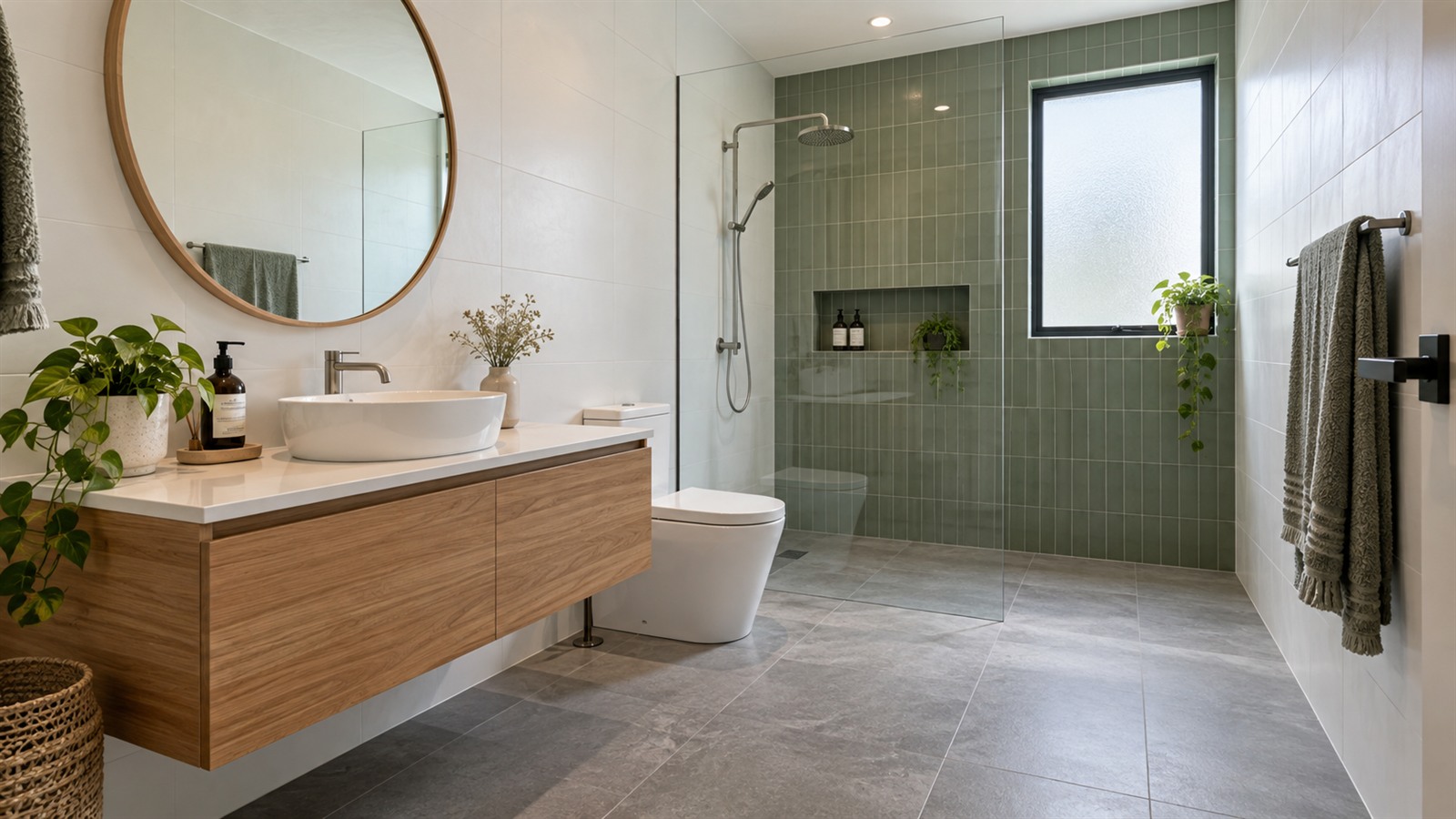
The single biggest improvement you can make is to keep the shower water in one area. A dry zone for the basin and toilet means a dry floor, safer footing and less cleaning.
In most bathrooms, the layout follows a simple order from the door: basin nearest, then toilet, then shower at the far end. The shower is enclosed so water stays there.
If your bathroom is long and narrow, this order works naturally. In a square room, place the shower in a corner and use a screen to close it off.
A small step down or a slight slope into the shower area keeps water from creeping out. Ask your contractor to fall the shower floor clearly towards its own drain, and keep a second floor trap in the dry area just in case.
If the whole family shares one bathroom, think about moving the basin just outside the bathroom door. One person can brush their teeth while another showers, which makes busy school mornings much calmer. Many terrace houses and some condos have a short passage or corner where a basin, mirror and small cabinet fit neatly.
Glass Screens and Shower Doors
Glass is the most popular way to separate the shower in Malaysian bathrooms because it keeps the room bright and feels open.
Options to consider:
- Fixed glass panel: one panel with an open entry. Simple, easy to clean, but some water may splash out.
- Hinged door: swings open. Needs space in front for the door to open.
- Sliding door: good for narrow bathrooms where a swinging door would hit the toilet or basin.
- Framed or frameless: frameless looks cleaner, framed is usually easier to adjust and seal.
Always choose tempered safety glass. A clear glass screen shows water marks, so a squeegee kept nearby is a good habit. Frosted glass hides marks and adds privacy in a shared bathroom.
If glass is not practical, a shower curtain on a ceiling track still does a decent job, especially in children’s bathrooms.
Tiles That Keep Everyone on Their Feet
Floor tiles in a bathroom should be chosen for grip first. Polished tiles look glamorous in a showroom but become dangerous when wet.
Look for tiles labelled anti slip or matt, with a slightly textured surface. Smaller tiles on the shower floor are helpful, because the extra grout lines add grip and let the floor slope towards the drain more easily.
For walls, you have more freedom. Large format tiles mean fewer grout lines and less cleaning. A feature wall behind the basin or inside the shower adds personality without making the whole room busy.
Ask for good quality grout that resists water and stains. Dark grout hides discolouration better than white in a humid bathroom.
Ventilation and Mould
Humidity is the constant enemy of Malaysian bathrooms. Without good airflow, moisture sits on the ceiling and walls, and mould soon follows.
What helps:
- A window that opens, kept open after showers when possible.
- An exhaust fan ducted outside, not just into the ceiling space. Choose one that runs quietly so people actually switch it on.
- Moisture resistant ceiling board instead of standard board, which can sag and stain.
- Mould resistant paint on any painted walls and ceilings.
- A gap under the door or a vent panel so fresh air can enter while the fan pulls damp air out.
Some owners link the exhaust fan to the light switch, so it runs every time the bathroom is used. A timer that keeps the fan running for a while after the light goes off is even better.
Storage You Will Actually Use
Bathrooms fill up fast with toiletries, towels, cleaning products and spare tissue rolls. When there is no storage, everything ends up on the edge of the basin.
Ideas that work well:
- A vanity cabinet under the basin, with drawers instead of a single cupboard.
- A floating vanity, which makes cleaning the floor easier and makes the room feel bigger.
- A mirror cabinet above the basin for daily items.
- A recessed niche in the shower wall for shampoo and soap. Plan it early, before the tiles go up.
- Hooks and a heated or ventilated towel rail so towels dry properly.
Choose materials that cope with humidity. Aluminium, solid surface or moisture resistant board lasts longer than standard boards in a steamy room.
Where to Put the Water Heater
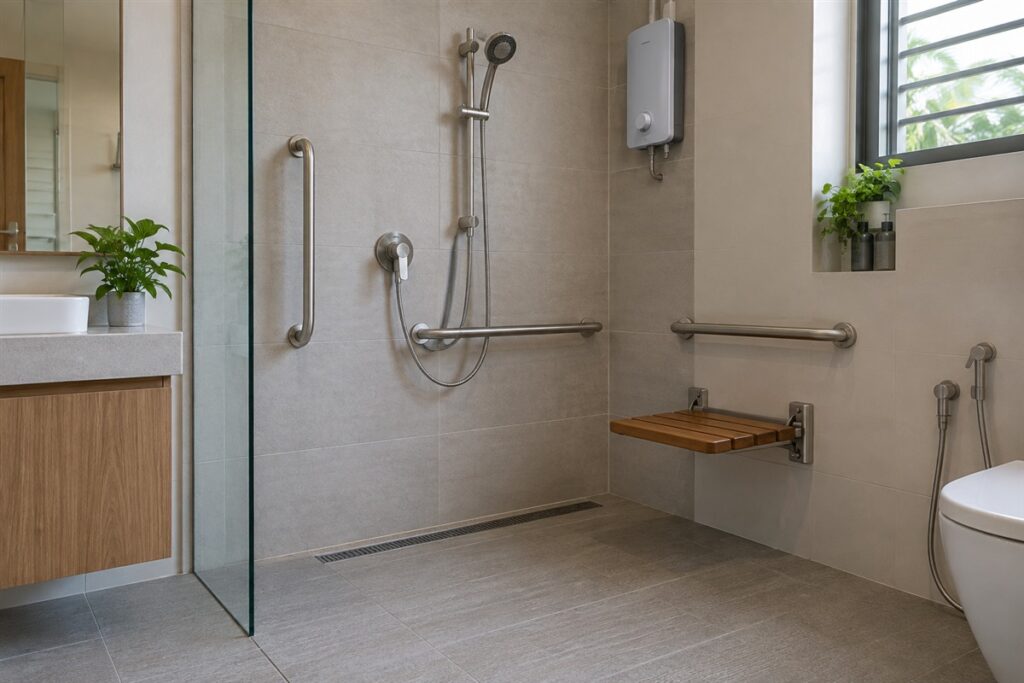
Many homes use an instant water heater mounted on the shower wall. Plan its position before tiling so wiring and pipes can be hidden neatly.
Place it inside the shower area but away from direct spray, at a height adults can reach easily. The power supply must be installed by a qualified electrician, with the right safety protection. Never let a handyman run an extension wire to a water heater.
If you prefer a storage heater that serves several bathrooms, it needs space in a ceiling or a service area. This is more common in landed homes and needs careful planning with your plumber.
Designing for Ageing Parents
If older parents live with you or visit often, a few changes make the bathroom much safer.
- Install grab bars next to the toilet and inside the shower, fixed firmly into the wall.
- Choose a shower area with no step, so a walker or wheelchair can roll in.
- Add a fold down shower seat.
- Use a handheld shower head on a sliding rail.
- Pick lever handles on taps, which are easier for weak or stiff hands.
- Add a night light so the path from the bedroom is lit.
These changes are also useful for young children, and they cost much less if planned during a renovation than added later.
Cost and Condo Rules
Every bathroom renovation is different, so there is no fixed price. What affects the cost:
- Hacking existing tiles and redoing waterproofing
- Moving the toilet, shower or drains
- Tile choice and the size of the room
- Glass screens, vanity and fittings
- Electrical work for heaters and fans
Waterproofing is not a place to cut corners, because leaks can damage the unit below. Get at least three written quotes with the same items listed. In a condo, check with your condo management about wet area renovation rules before work starts. A contractors directory such as Renovation Pages can help you shortlist companies.
Bathroom Questions Answered
Can a small condo bathroom have wet and dry zones?
Yes. A single fixed glass panel or a sliding door is often enough to keep the shower water contained.
Why does mould keep coming back?
Usually because moisture is not leaving the room. Improve ventilation first, then clean and treat the mould.
Are rain showers practical?
They feel nice, but need good water pressure. Pair one with a handheld shower for cleaning and for older family members.
Should the bathroom floor be the same as the rest of the house?
It can be, but only if the tile has good grip when wet. Many owners choose a separate anti slip tile for safety.
A Room That Stays Fresh
A good bathroom is dry underfoot, bright, easy to clean and safe for everyone in the family. Separate the wet and dry zones, choose tiles with real grip, and treat ventilation as seriously as the design.
Plan the water heater, storage and grab bars early, and your bathroom will stay fresh and practical for many years.