Modern Malay Interior Design: Heritage Details for Today’s Homes
Bring the warmth of the traditional Malay house into your condo or terrace home with timber, carved panels, batik, songket and rattan, used in a modern way.
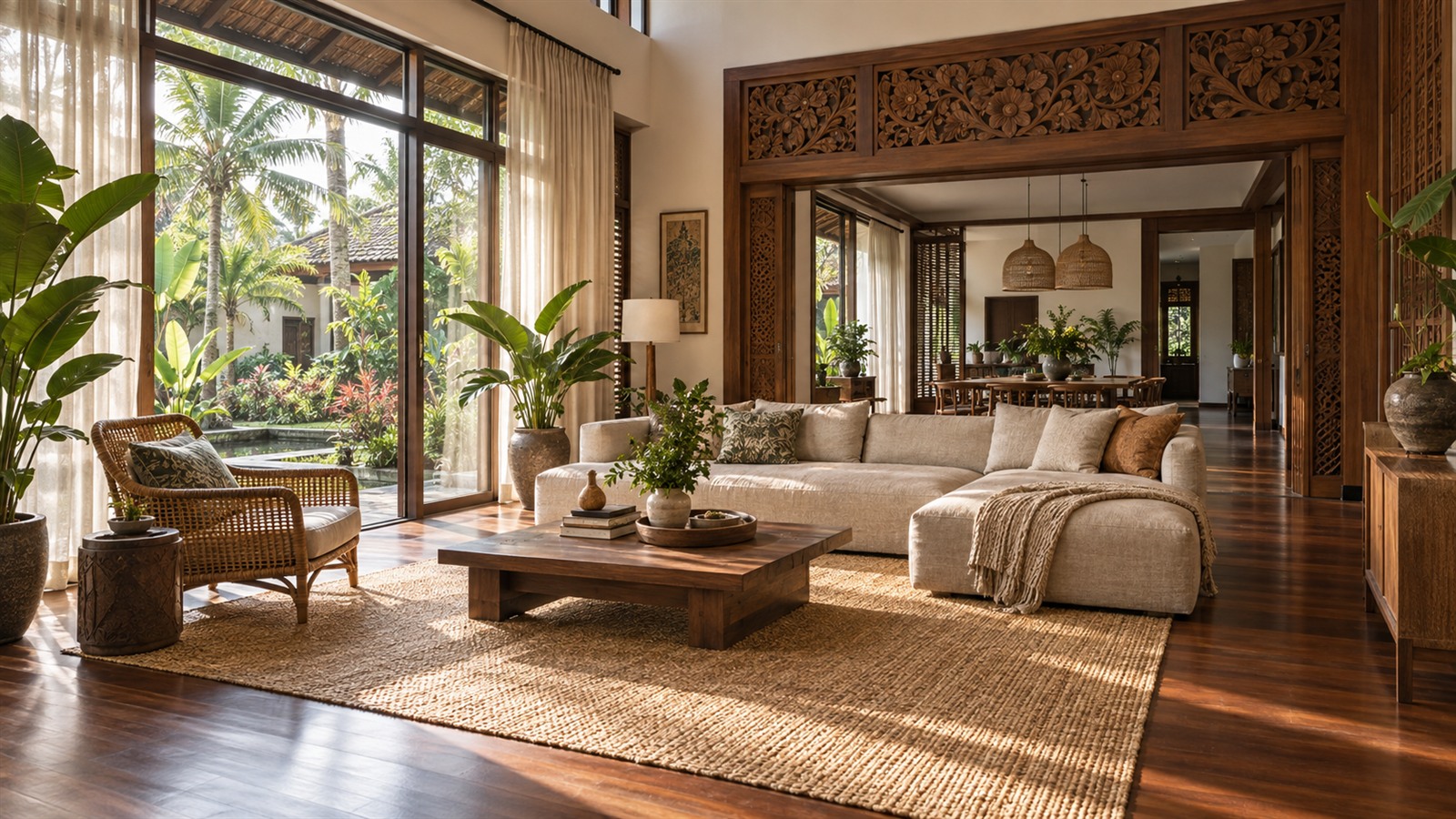
Picture a hot afternoon in a kampung house. The floor is raised off the ground, the timber feels cool under your feet, and a soft breeze moves through carved panels above the windows. Nobody switches on the aircond, because the house was built to stay comfortable on its own.
Now picture a typical condo in KL. Sealed windows, white walls, tiled floors and an aircond running most of the day. Many of us grew up visiting a grandparent’s house in the village, and we miss that calm, airy feeling.
The good news is that you do not need to live in a wooden house on stilts to enjoy it. Malay interior design is full of ideas that still make sense today. With a few careful choices, you can bring that warmth into a condo, a terrace house or a semi-D without turning your home into a museum.
What the Old Houses Got Right
The traditional Malay house was shaped by our climate. Builders across the peninsula worked with heat, heavy rain and humidity long before anyone had electric fans. Styles differ from state to state, so there is no single “correct” version. Still, a few ideas show up again and again.
Raised floors and open living
Many traditional houses sit on timber posts. This lifts the living space above damp ground and floods, and lets air move underneath. Inside, rooms are often open and flexible. The same space can be used for eating, sleeping or gathering, depending on the time of day.
Air that can move
Big windows, often reaching close to the floor, let the breeze in at sitting height. That makes sense in homes where people traditionally sit on the floor. Carved panels above doors and windows let hot air escape while still giving privacy and shade.
A welcoming front space
The verandah or front porch area is where guests are first received. It is a shaded, in between space. You are not fully outside, and not fully inside. It says a lot about the value of hospitality in Malay culture.
Natural materials
Timber, bamboo, woven mats and thatch were used because they were local, cool and easy to repair. They also age with a soft, lived in look that many people find beautiful.
Heritage Details That Work in a Modern Home
You do not need all of these ideas. Pick two or three that fit your space and your family, and let them lead.
Carved timber panels
Wood carving is one of the most admired Malay crafts. Motifs are often drawn from plants, flowers and leaves, and designs vary a lot between regions and carvers. In a modern home, a single carved panel can do a lot of work:
- As a screen between the living and dining area
- Above a door or a feature wall, echoing the old ventilation panels
- As a headboard in the master bedroom
- As a sliding cabinet door or a panel for a wall mounted TV console
If you can, buy from a local craftsman or ask where the piece was made. A real hand carved panel has character that a machine cut copy does not.
Warm timber floors and ceilings
Timber flooring instantly softens a room. In humid Malaysian homes, ask your contractor which timber or engineered floor suits your space, and keep real wood away from wet areas. A timber strip ceiling in a small area, such as above a dining table, can also bring back that kampung house feeling.
Low seating and floor living
Many families still enjoy sitting on the floor for meals or chatting during festive seasons. A low platform with cushions, a daybed or a raised corner with a thick mat can bring back this habit. It also makes a small condo feel more relaxed.
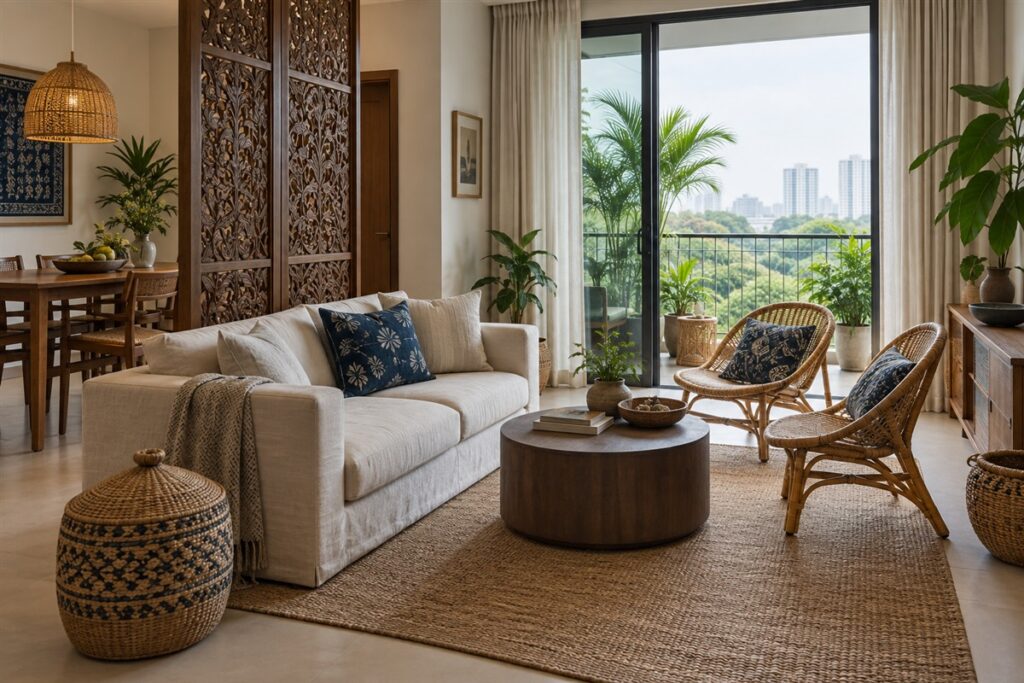
Textiles, Weaving and Colour
Fabrics and woven items are the easiest way to start, because you can add them without any renovation.
Songket and batik
Songket is a rich woven fabric, traditionally made with gold or silver threads, and is closely linked to ceremonies and special occasions. Because of this, treat it with some care. Framing a piece of songket on the wall, or using it as a table runner for special days, shows respect for the craft. Avoid cutting a treasured family piece into cushion covers.
Batik is more relaxed and very flexible. Malaysian batik is known for its flowing, hand drawn designs of flowers and leaves. Try it as:
- Cushion covers on a plain sofa
- A framed panel in the dining area
- Curtains or a bed throw in a guest room
- A lampshade or a small upholstered stool
Keep the rest of the room calm when you use batik. One or two strong patterns look much better than five.
Rattan and mengkuang
Rattan is strong, light and made for our climate. It lets air pass through, so it feels cooler to sit on than a thick fabric chair. Rattan armchairs, headboards, pendant lamps and cabinet door panels all fit well in a modern Malay look.
Mengkuang, a type of pandan leaf, has long been woven into mats, baskets and boxes. Use woven baskets for storage in the living room, or hang a large mat as a textured wall piece. Buying directly from craft makers supports the people who keep these skills alive.
A colour palette from nature
Think warm timber browns, cream, clay, soft green and deep indigo. Add small touches of gold or maroon if you use songket. Plain walls in off white or warm beige help the handmade pieces stand out.
Making It Work in Condos and Terrace Houses
Most of us do not live in a timber house, so the trick is to borrow the ideas, not copy the building.
In a condo
- Bring back cross ventilation. Keep the path between windows clear. Use light, sheer curtains instead of heavy blackout ones in the living area.
- Create a mini verandah. Treat the balcony as your serambi. Add a small rattan bench, plants and a woven mat so it becomes a place to sit, not just a place to dry clothes.
- Use one hero piece. A carved screen or a large framed batik gives the room its identity without clutter.
- Check before you drill. If you plan to change flooring or add built-in timber work, get approval from your condo management first.
In a terrace house or semi-D
- Open up the front. A shaded porch with timber seating and plants can feel like a verandah. Your local council may need to approve changes to the front of the house, so ask your designer.
- Add a timber feature. A timber staircase, a slatted screen near the entrance or a carved panel over the main door all make a strong first impression.
- Mix heritage and modern. Pair a clean modern sofa with a rattan armchair and batik cushions. The contrast keeps the room from feeling old fashioned.
For a larger project, an experienced interior consultant can help you balance heritage details with modern needs like storage, lighting and aircond placement.
Getting It Right With Respect
Malay heritage is living culture, not just a style. A few simple habits help you use it well:
- Learn a little about the pieces you buy. Ask where they come from and what the patterns mean.
- Support local craftspeople and small workshops whenever you can.
- Keep religious text and sacred items out of casual decor unless you understand the proper way to display them.
- Aim for a home that feels lived in and sincere, rather than themed.
Questions Readers Often Ask
Is Malay interior design only for Malay families?
No. Many Malaysians of every background love timber, rattan and batik. These crafts are part of our shared national identity. Just use them with care and respect.
Will timber and rattan survive the humidity?
Yes, if you look after them. Keep them away from direct rain and wet areas, allow good airflow, and wipe them down regularly to stop mould.
How is malaysian interior design different from Malay interior design?
Malaysian interior design is broader. It can draw from Malay, Chinese, Indian, Peranakan and indigenous traditions, plus modern styles. Malay interior design focuses on the Malay house and its crafts.
Can I get the look without renovating?
Yes. Start with batik cushions, a rattan chair, woven baskets and one carved panel. These can all move with you if you change homes.
Heritage That Fits Today’s Home
The best modern Malay homes do not shout about heritage. They feel cool, open and welcoming, just like the kampung houses they are inspired by. Choose a few meaningful pieces, let air and light move through the space, and give your home a place to welcome guests. That quiet warmth is what makes this style last.