What Makes an Interior Look Luxury
Luxury is not about gold taps. Learn how a luxury interior designer uses proportion, lighting layers, materials, hidden storage and small details to lift a home.
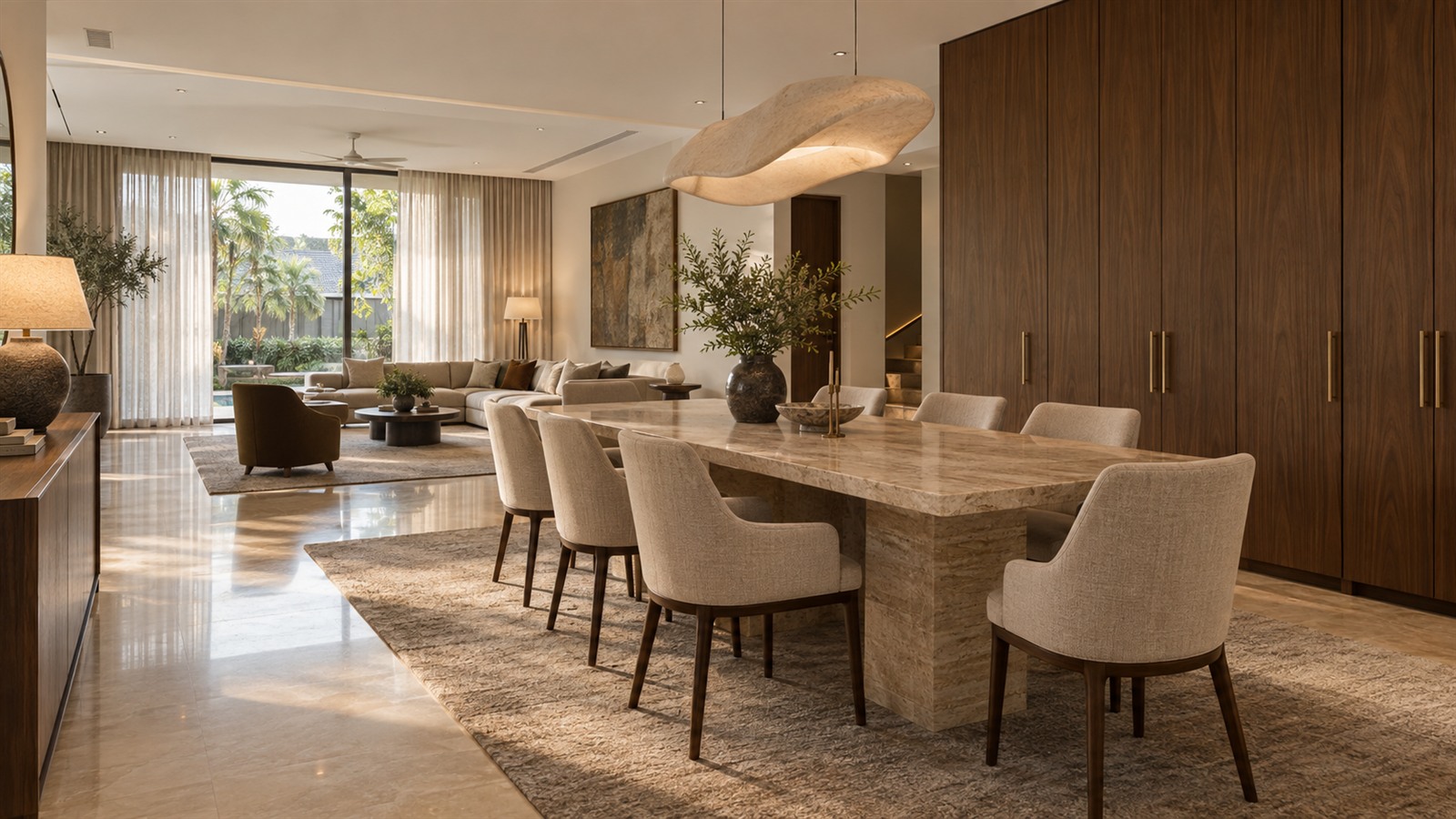
Two condos in the same building can have the same layout, the same view and the same size. One looks like a hotel suite. The other looks tired, even though the owner spent a lot on furniture.
The difference is rarely one expensive item. It is a set of quiet decisions about size, light, material and detail. A good luxury interior designer knows these rules by heart, and many of them cost less than people expect.
Here is what really makes a home look and feel luxurious, and how you can apply it to a condo, terrace house or semi-D.
Luxury Starts With Proportion
Walk into a room that feels expensive and you will notice that nothing looks squeezed. Furniture fits the room. Ceilings feel high. There is space to walk around.
Scale furniture to the room
A huge sofa in a small living room makes the room look cheap, no matter what it cost. A tiny rug floating in the middle of a big room does the same. Measure first. Leave clear walkways, and choose a rug large enough for at least the front legs of the sofa and chairs to sit on it.
Draw the eye upwards
Full height doors, tall curtains hung close to the ceiling and wardrobes that go right to the top all make a room feel taller. Low doors and short curtains cut the wall in half and make the space feel smaller.
Line things up
Luxury rooms feel calm because the lines match. Cabinet tops align with door frames. Light fittings are centred over the dining table. Shelf spacing is even. These are small things, but your eye notices when they are off.
A Calm, Limited Colour Palette
Luxury rooms rarely use many colours. Most are built on a quiet base of warm white, cream, stone, taupe or soft grey. Stronger colour comes in small doses, such as a deep green velvet chair, a navy rug or a single painting.
A limited palette does two things. It makes the room feel bigger and more restful, and it lets the materials and furniture take centre stage.
A few tips that work well in Malaysian homes:
- Choose warm neutrals rather than cold, bright white, which can look harsh under strong tropical daylight
- Keep the ceiling, walls and built-in cabinets in related tones so they blend together
- Repeat your accent colour two or three times across the room so it looks planned
- Use texture instead of pattern to add interest, such as linen, boucle, fluted timber or limewash walls
When in doubt, test paint samples on the wall and look at them in the morning, afternoon and at night before you decide.
Light in Layers, Not One Big Lamp
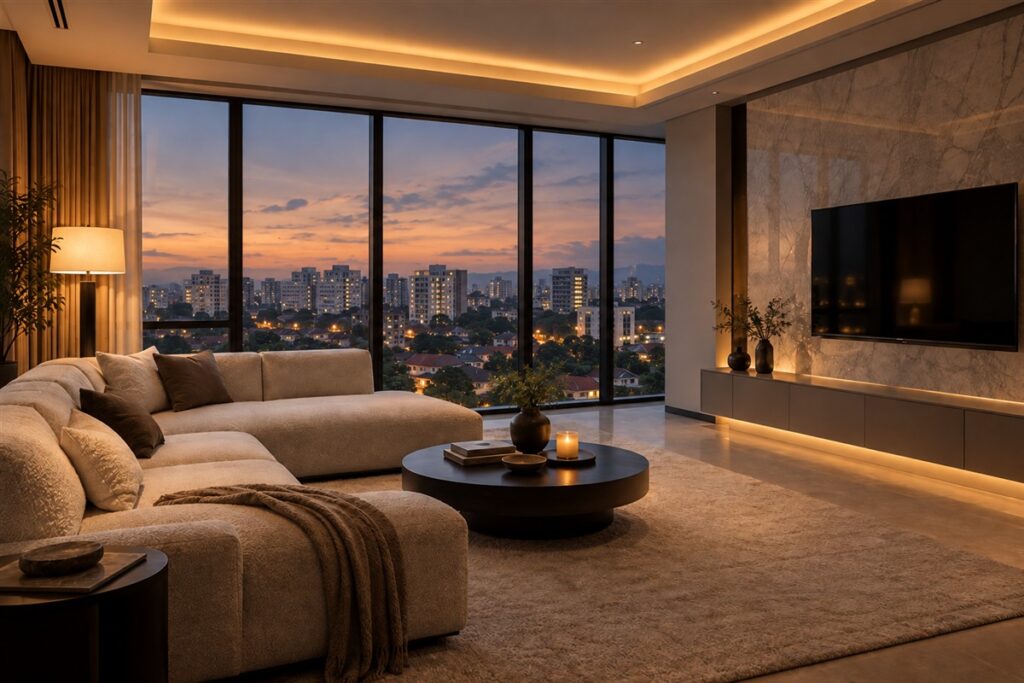
Most Malaysian homes are lit by one row of bright downlights. That is practical, but it flattens a room. Luxury spaces use several layers of light that you can mix.
- General light from ceiling fittings, soft and even, not glaring
- Task light over the kitchen counter, desk, vanity and reading chair
- Accent light that shows off art, a textured wall or a shelf
- Hidden light tucked into a cove ceiling, under cabinets or behind a headboard
Warm white light feels richer and more relaxing in living and sleeping areas. Dimmers let you change the mood from bright family dinner to quiet evening. A plaster ceiling with a lighting cove is one of the most effective upgrades; specialists like JT Ceiling can advise on what works for your ceiling height.
Materials That Feel Real
Luxury is something you feel with your hand as much as your eye.
Fewer materials, used well
A common mistake is mixing too many finishes. Marble, wood, brass, velvet, glass and patterned tiles all in one room fight each other. Pick two or three main materials and repeat them across the home. The result feels planned instead of busy.
Natural or natural looking
Real stone, timber veneer, linen, wool and leather age well. If your budget does not allow them everywhere, use the real thing where people touch it most, such as the dining table, the kitchen counter and door handles. Good quality surfaces that look like stone or wood can fill in elsewhere.
Matte over shine
Too much gloss can look cheap and shows every fingerprint. Matte, honed or brushed finishes feel softer and richer. They are also easier to live with in a humid climate where surfaces are wiped often.
Think about touch and sound
Heavy doors that close softly, thick curtains that fall properly and rugs that soften footsteps all add to the feeling of quality. Luxury is quiet.
Storage You Do Not See
Nothing kills a luxury look faster than clutter. Shoes by the door, cables across the floor, appliances on every counter. Luxury homes hide it all.
- Full height cabinets with flat doors that blend into the wall
- A pocket or tall cabinet in the kitchen that hides the rice cooker, kettle and coffee machine
- A shoe cabinet at the entrance with ventilation for our humid weather
- A TV wall with space for the router, cables and devices behind closed doors
- Enough drawers in the bedroom so nothing sits on top of the dresser
Plan storage early, before the furniture. If every item has a home behind a door, the room stays calm even on busy days.
Fewer, Better Pieces
It is tempting to fill every wall and corner. Resist it. A luxury room usually has fewer pieces, but each one is well made and chosen with care.
Instead of four cheap side tables, buy one good one. Instead of ten small decorative items, display three that mean something to you. Give a special artwork or a statement chair space to breathe.
This also saves money over time. Well made furniture lasts longer and does not need replacing every few years.
The Details Most People Miss
This is where a skilled designer earns their fee. Small details make the difference between “nice” and “wow”.
Skirting and trims
Cheap, thin skirting with visible joints makes walls look unfinished. A taller, simple skirting painted the same colour as the wall, or a slim recessed shadow line, looks far cleaner.
Handles and hardware
Handles are touched every day. Solid, weighty handles in brushed brass, black or stainless steel feel better than light hollow ones. Keep the style the same across the home. Soft close hinges and drawers add a quiet, quality feel.
Switches and sockets
Plain, flat switch plates in a colour that matches the wall look neater than bulky ones. Line them up at the same height.
Joints and edges
Look at where the floor meets the wall, where the cabinet meets the ceiling and where two tiles meet. Clean, straight, tight joints are a sign of good workmanship. Messy silicone and uneven gaps are hard to ignore once you see them.
What Changes the Cost
A luxury look does not have a fixed price. It depends on:
- How much of the home you are changing
- The materials you choose, and where you use real stone or timber
- The amount of built-in carpentry and ceiling work
- Lighting design, including dimmers and hidden strips
- The level of finishing detail you want
Ask for at least three written quotes that list the same items, finishes and brands of hardware. Then compare them line by line so you know exactly what you are paying for.
Ask the Designer
Do I need a luxury interior designer to get this look?
Not always. The ideas above work at any budget. A designer helps most with proportion, lighting plans and detailing, which are hard to get right on your own.
Can a small condo look luxurious?
Yes. Clear surfaces, hidden storage, layered lighting and a tight palette of materials work especially well in small spaces.
What is the fastest way to make a room look more expensive?
Clear the clutter, add warm lamps, hang curtains higher and wider, and swap cheap handles for solid ones.
Is gold and marble still luxury?
They can be, when used with restraint. A little brass or one marble surface feels special. Too much looks like a showroom.
Quiet Is the New Luxury
A luxurious home is not loud. It is calm, well lit, well organised and made with care. Get the proportions right, layer your lighting, choose a few good materials and hide what you do not need to see. Then look closely at the details. That is where true luxury lives.